Download screening checklists that you can use to gather input from caregivers and classroom teachers.
Handouts:
Download caregiver and educator handouts with communication supports for specific conditions.
Visual Supports:
Download visual cues and aids that you can use to support children with communication challenges.
Let's get started!
Answer the questions below to discover the right curriculum for this individual.
Is the individual able to communicate using words?
Can they effectively communicate at least 50 different ideas or messages using some form of intentional communication (spoken words, sign language, or an alternative means like pointing at pictures or using a communication device)?
Jump Straight to a Specific Curriculum or Skill
Jump to a Curriculum:
Browse by communication challenge (ex: "vocabulary")
Jump to a Skill:
Browse by specific skill (ex: "multiple meaning words")
Screening Checklists for Caregivers and Educators
Use these checklists to gather data from caregivers and/or educators that you can use to complete the assessment tool.
Step 1: Screening Checklist
This will narrow down the specific communication domain(s) that need to be addressed.
Step 2: Progress Monitoring Tools and In-Depth Checklist
Once you have identified the area(s) that you want to pursue, use the corresponding progress monitoring tool and checklist to gather more data. This will help you track progress over time and identify the correct curriculum for this individual.
Speech Sounds:
Individuals with speech sound problems have difficulty pronouncing sounds correctly. Their speech is difficult to understand. Fill out the Speech Sounds Progress Monitoring Tool to dive deeper.
Language:
Individuals with language difficulties struggle to understand or use words effectively. This can impact their ability to follow directions, express thoughts, or build sentences correctly. Fill out the Language Progress Monitoring Tool to dive deeper.
Voice/Resonance:
Individuals with voice or resonance concerns may have voices that sound hoarse, too nasal, too quiet, or otherwise unusual. These issues can affect how others perceive and understand them. Fill out the Voice/Resonance Progress Monitoring Tool to dive deeper.
Fluency:
Individuals with fluency difficulties may experience stuttering or interruptions in their speech. This can include repeating sounds, stretching out words, or having frequent pauses. Fill out the Fluency Progress Monitoring Tool to dive deeper.
Functional Communication:
Individuals with functional communication difficulties struggle to get their needs met using speech, gestures, or other means of communication. They may have trouble making requests, answering questions, or using words effectively in daily life. Fill out the Functional Communication Progress Monitoring Tool to dive deeper.
Social Communication:
Individuals with social communication challenges may struggle with conversational skills, understanding social cues, or using language appropriately in different social interactions. This can affect their ability to interact with others successfully. Fill out the Social Communication Progress Monitoring Tool to dive deeper.
Handouts
Access caregiver and educator handouts with communication supports for specific conditions.
Visual Supports
Access visual cues and aids that you can use to support children with communication challenges.
Jump to a Curriculum
Choose a Therapy Curriculum below to explore recommended skills and therapy targets.
Which area do you think the individual needs to focus on the most right now?
There's no one right or wrong answer here. Try to choose an area that is causing the most frustration for the individual or that would make the biggest impact in being able to communicate effectively with others.
Speech Sounds
Speech is difficult to understand
Says specific sounds incorrectly
Leaves off sounds from words
Mumbles or slurs speech
Language
Has trouble following directions
Has trouble asking and answering questions
Has trouble retelling stories or past events in a way that makes sense
Has frequent grammar/syntax errors
Has trouble with figurative or abstract language
Has trouble with reading and writing
Uses vague or imprecise language/words
Doesn't know what things are called
Voice/Resonance
Voice quality sounds different from others (hoarse, raspy, breathy, gravelly, strained)
Has differences in volume, rate, or pitch
Voice sounds too nasal or like they have a stuffy nose
Frequently loses their voice
Social Communication
Does not respond to others when spoken to
Struggles with initiating or maintaining conversations
Struggles with building and maintaining friendships and relationships
Has trouble self-calming when upset and navigating disagreements with others
Has trouble speaking up for self
Struggles with topic maintenance or providing relevant information
Will speak in some situations but not in others
Has trouble repairing a conversation when it breaks down (such as if the other person is confused)
Fluency
Repeats sounds, syllables, words, or phrases when speaking
Struggles to coordinate their breathing with their speech
Has trouble with word-finding, may say the wrong word or use words like "stuff" and "that thing"
Elongates sounds or seems to get stuck on them
Gets anxious or frustrated by their disfluencies
Let's Work on Functional Communication!
Our first mission is to help this individual find a way to communicate their basic wants and needs. We call this functional communication.
Take a look through the options below and pick the area that feels like the best starting point for this individual. There's no perfect answer—just choose the one that seems most useful right now. If it's not quite the right fit, you can always come back and try a different path. Don't worry if every line doesn't match exactly—go with the one that fits best overall.
Early Interactions
Does not allow others to take turns with them in play
Does not pay attention to others who try to interact with them
Does not respond to others or turn when their name is called
Struggles to follow one-step directions
Struggles to follow multi-step directions
Struggles to follow and participate in familiar routines
Struggles to handle new routines or changes in routine
Does not answer simple questions, such as “yes/no” questions or “do you want ____ or ____?”
1
Does not engage in early social routines, such as peek-a-boo, high fives, or greetings
Analytic Language Processors (ALPs)
Uses single words to communicate (e.g., "milk," "ball," "go") rather than long, memorized phrases
Shows a gradual buildup of vocabulary, learning one word at a time instead of repeating whole scripts
Attempts to combine words into short phrases as their vocabulary grows (e.g., "want cookie," "big truck").
Does not rely on echolalia or repeating scripts to communicate
Gestalt Language Processors (GLPs)
Speaks in full phrases or scripts they've heard before (e.g., from a show or caregiver).
Uses melodic speech with varying intonation but may have unclear articulation
May sound like they're "speaking gibberish" with lots of emotion or intonation variability
Repeats phrases the same way every time they say it (e.g., says “Do you want it?” to request something because they've heard others say it to them).
Loves songs, quotes, and categories like numbers, letters, or shapes
Likes to play the same way every time or seems to re-enact the same scenes over again
May get upset when others try to change the play or the routine
Augmentative and Alternative Communication (AAC)
Uses gestures/behaviors to express what they want/need
Uses sign language to express what they want/need
Will point to pictures to show what they want/need
Can use a communication device or other type of Alternative/Augmentative Communication (AAC) system to express what they want/need
Speech is very hard to understand and/or they are making slow progress toward intelligible speech
Gets frustrated because speech is not easily understood or seems upset that they aren't speaking like others
Let's Work on Speech Sounds
Take a look through the options below and pick the area that feels like the best starting point for this individual. There's no perfect answer—just choose the one that seems most useful right now. If it's not quite the right fit, you can always come back and try a different path. Don't worry if every line doesn't match exactly—go with the one that fits best overall.
Articulation
Says specific sounds incorrectly
Some sounds are distorted or sound different than they should
Phonology
Leaves off sounds at certain positions of the word (beginning, middle, or end)
Has trouble with whole classes of sounds, like long sounds (fricatives) or ones made in a particular place in the mouth (back sounds like /k/ and /g/)
Can say certain sounds in some positions/words but not others (ex: can say at the beginning of a word but not at the end)
Cycles Approach for Phonology
Highly unintelligible (very difficult to understand)
Frequently leaves out or omits speech sounds
Replace some sounds with other sounds
Doesn't use very many different consonant sounds
Motor Speech
Speech sound errors are inconsistent
Has more trouble with sounds in longer words
Seems to physically struggle to get the sounds out
Sounds robotic/choppy
Drooling or excessive saliva buildup
Mumbling
Mumbles or slurs speech
Speaks too quickly
Speaks too quietly
Can say sounds correctly in single words but intelligibility reduces in conversational speech
Let's Work on Language
Take a look through the options below and pick the area that feels like the best starting point for this individual. There's no perfect answer—just choose the one that seems most useful right now. If it's not quite the right fit, you can always come back and try a different path. Don't worry if every line doesn't match exactly—go with the one that fits best overall.
Following Directions
Struggles to follow one-step directions
Struggles to follow multi-step directions
Easily distracted when following directions
Sequencing/Retelling
Struggles to retell a past event or story
Events are out of order when retelling something
Retellings start in the middle or don't provide enough background information
Abstract Language
Struggles with figurative language (idioms, sarcasm, similes, metaphors, etc.)
Struggles with making inferences
Vocabulary
Uses vague or imprecise language/words
Has trouble following directions that contain unfamiliar words/concepts
Doesn't know what things are called or struggles to understand words that they read/hear
Asking and Answering Questions
Has trouble answering basic wh- questions like "who, what, where," etc.
Has trouble asking questions in a way that makes sense
Struggles to answer questions about something they just heard, such as a story being told or information provided
Grammar/Syntax
Has syntax grammar errors in their conversational speech
Speech sounds telegraphic (missing words or grammar so they sound choppy)
Uses sentences/utterances that are shorter or less complex than others their age
Language Foundations for Literacy
Struggles with phonological awareness skills (like rhyming, alliteration, etc.)
Struggles with understanding texts (such as identifying story elements or main idea/details)
Struggles to produce their own writings
Not meeting literacy expectations in academic work/school
Cycles Approach for Language
Struggles significantly with many of the above aspects of language
~OR~
Language skills are slightly delayed in several areas but are not significant enough to require intensive therapy on any one area
Language struggles are impacting reading and writing skills in many ways
Let's Work on Voice/Resonance
Take a look through the options below and pick the area that feels like the best starting point for this individual. There's no perfect answer—just choose the one that seems most useful right now. If it's not quite the right fit, you can always come back and try a different path. Don't worry if every line doesn't match exactly—go with the one that fits best overall.
Foundations of Healthy Voice Use
Coughs or clears their throat frequently
Frequently yells, screams, or cheers loudly
Makes a lot of loud or harsh sound effects while playing
Frequently speaks very loudly or in an unnatural speaking voice
Frequently loses their voice
Frequently breathes through the mouth instead of the nose
Runs out of breath when speaking or lacks breath support
Has noisy or effortful breathing during speech
Voice
Frequently speaks with a hoarse/raspy voice
Frequently speaks with a breathy/airy voice
Voice sounds like they are straining or forcing it out
Voice often sounds gravelly, crackly, or growly
Resonance (Nasality)
Voice sounds too nasal or like they have a stuffy nose
Sounds like they are talking through their nose
Can hear air puffing or rattling in nose when they talk
Speech sounds weak or muffled, especially on sounds like /p/, /t/, /k/
Prosody
Speech sounds choppy or robotic
Trouble with volume (too loud or too quiet)
Trouble with rate (too fast or too slow)
Trouble with pitch (too high, too low, or monotone with no pitch variability)
Let's Work on Social Communication
Take a look through the options below and pick the area that feels like the best starting point for this individual. There's no perfect answer—just choose the one that seems most useful right now. If it's not quite the right fit, you can always come back and try a different path. Don't worry if every line doesn't match exactly—go with the one that fits best overall.
Social Awareness and Interaction
Does not respond to others or look when their name is called
Struggles with joint attention and turn taking
Has trouble with proximity/giving personal space
Struggles to stay on topic or provide relevant information
Has difficulty with perspective-taking or understanding others
Abstract Language
Trouble understanding and interpreting body language and other nonverbal communication
Trouble with figurative language (idioms, sarcasm, similes/metaphors, etc.)
Trouble making social inferences
Selective Mutism
Will speak in some situations with some people but not in others
Shows anxiety about speaking
Emotional Regulation and Self-Advocacy
Has trouble self-calming when upset
Has trouble managing highs and lows in mood and behavior
Resorts to challenging/unexpected behaviors when struggling with social interactions, such as being aggressive or saying hurtful things
Has trouble speaking up for what they need or taking action to get their needs met
Conversational Skills
Struggles with initiating interactions with others
Struggles with topic maintenance or providing relevant information during conversations
Doesn't always speak up for what he/she wants or needs
Has trouble continuing an interaction through responding, commenting, asking questions, etc.
Has trouble repairing a conversation when it breaks down (such as if the other person is confused)
Has trouble navigating disagreements with others
Let's Work on Fluency
Take a look through the options below and pick the area that feels like the best starting point for this individual. There's no perfect answer—just choose the one that seems most useful right now. If it's not quite the right fit, you can always come back and try a different path. Don't worry if every line doesn't match exactly—go with the one that fits best overall.
Foundations for Fluency
Seems unaware that they are stuttering or have disfluencies
Seems upset by their stuttering/disfluencies
Has negative thoughts about self or low self-confidence due to stuttering/disfluencies
Gets visibly anxious or upset when stuttering/having disfluencies
Refuses to talk about their stuttering/disfluencies
Struggles to coordinate breathing with speech
Stops in the middle of sentences or phrases to breathe
Word Finding/Word Retrieval
Overuses non-specific words like "that thing" and "stuff"
Struggles to come up with the word they're looking for
Sometimes says the wrong word for things
Talks around words (ex: "the red fruit that grows on trees")
Stuttering
Is younger than 5 years old with disfluency that comes and goes
Repeats whole words and phrases or revises what they were saying frequently
Uses filler words like "um, uh"
Repeats parts of words or single sounds
Elongates sounds
Seems to get stuck where no sound is coming out
Sometimes uses movements or muscle tension to seemingly "push" through moments of stuttering
Cluttering
Speaks very quickly, causing speech to become more disfluent
Fluency improves when told to speak more slowly
Leaves out many sounds or word endings in conversational speech, sounds like words all run together
Frequently uses filler words like "um" and "like"
Often revises what they are saying mid-sentence (e.g., “I need to go…I mean I'm out of cheese”)
Early Interactions Curriculum
This curriculum will encourage the individual to engage, respond, and participate in social interactions. Choose the level below that best fits this individual's current level. You don't necessarily need to start at the first level if they have advanced beyond it.
Beginner Level: Building Awareness and Engagement
(Ages: 9-15 months and beyond)
Responding to Name
Joint Attention
Basic Turn Taking
Click to expand ▶
Intermediate Level: Understanding and Responding to Communication
(Ages: 1-2 yrs and beyond)
Following Basic Directions
Answering Yes/No Questions
Making a Choice Between Two Options
Click to expand ▶
Advanced Level: Expanding Social Participation and Interaction
(Ages: 1-3 yrs and beyond)
Participating in Early Social Routines
Increasing Interaction Length
Answering Wh- Questions
Click to expand ▶
Beginner Level: Building Awareness and Engagement
Responds to name in most settings; shares joint attention with adult support (e.g., follows gaze or pointing); participates in familiar turn-taking routines but may need reminders or prompts to stay engaged.
Sample Goal:
By the end of the reporting period, ____ will improve social awareness and engagement skills by achieving at least a 4 out of 5 on the following rubric as evaluated by the (speech-language pathologist/teacher/parent) over the previous two weeks.
Rubric:
5 – Emerging Mastery
Consistently responds to name, actively shares attention during play (e.g., looks between object and adult, points/showing), and initiates or participates in turn-taking activities with minimal support.
4 – Strong Progress
Responds to name in most settings; shares joint attention with adult support (e.g., follows gaze or pointing); participates in familiar turn-taking routines but may need reminders or prompts to stay engaged.
3 – Developing
Inconsistently responds to name; shows some awareness of shared activities but rarely shifts attention between people and objects; may imitate turn-taking actions but needs frequent support to participate.
2 – Emerging Skills
Rarely responds to name; joint attention is limited or absent (focuses only on object or person, not both); turn-taking occurs only with high levels of prompting and modeling.
1 – Limited/Not Yet Observed
Does not respond to name; no observable joint attention; does not engage in or attempt turn-taking activities even with adult modeling.
Therapy Activities:
To make progress in this area, choose one or more of the suggested activities below. You can present them in any order and skip any activities the individual has already mastered. Focus on one skill at a time. You may either work on a single skill until it is mastered, or rotate through all the skills—spending a set amount of time on each (e.g., 2 weeks)—and revisit the ones that still need more practice.
Intermediate Level: Understanding and Responding to Communication
At this stage, the child builds on their social engagement skills by learning to understand and respond to simple communication cues. They are learning how to follow directions and make choices, which allows for increased participation in their environment.
Sample Goal:
By the end of the reporting period, ____ will improve social understanding and responding skills by achieving at least a 4 out of 5 on the following rubric as evaluated by the (speech-language pathologist/teacher/parent) over the previous two weeks.
Rubric:
5 – Emerging Mastery
Consistently follows common one-step directions in various settings, accurately answers yes/no questions to express preferences, and clearly makes choices between two options using words, gestures, or AAC.
4 – Strong Progress
Follows one-step directions with minimal support or cues, answers yes/no questions in familiar contexts, and makes choices between two options when prompted or offered in a structured setting.
3 – Developing
Follows simple directions inconsistently and/or only in familiar routines; shows emerging understanding of yes/no questions (e.g., sometimes nods, gestures, or gives unclear answers); can make a choice when given support or a model.
2 – Emerging Skills
Responds to directions only with frequent prompting or modeling; rarely responds to yes/no questions or choices without full assistance, or may repeat the question or last option given instead of responding.
1 – Limited/Not Yet Observed
Does not follow one-step directions, answer yes/no questions, or make choices between two presented options.
Therapy Activities:
To make progress in this area, choose one or more of the suggested activities below. You can present them in any order and skip any activities the individual has already mastered. Focus on one skill at a time. You may either work on a single skill until it is mastered, or rotate through all the skills—spending a set amount of time on each (e.g., 2 weeks)—and revisit the ones that still need more practice.
Advanced Level: Expanding Social Participation and Interaction
At this level, the child strengthens social communication skills and builds the ability to participate in early social routines and engage in longer interactions. They learn to respond to a wider variety of questions and begin engaging in back-and-forth exchanges with more independence.
Sample Goal:
By the end of the reporting period, ____ will improve social participation and interaction by achieving at least a 4 out of 5 on the following rubric as evaluated by the (speech-language pathologist/teacher/parent) over the previous two weeks.
Rubric:
5 – Emerging Mastery
Actively participates in familiar social routines with minimal prompting, maintains attention and engagement during multi-turn social interactions, and consistently responds to "What," "Where," and "Who" questions in familiar situations.
4 – Strong Progress
Joins in common social games and routines when prompted, stays engaged in short interactions with support, and responds accurately to some WH- questions with occasional prompts or cues.
3 – Developing
Occasionally participates in social routines with frequent support, briefly attends to back-and-forth interactions, and shows emerging understanding of WH- questions (may respond correctly in highly familiar contexts).
2 – Emerging Skills
Rarely joins social routines, attention to interaction is fleeting, and WH- questions are typically unanswered or the question is repeated instead of answered.
1 – Limited/Not Yet Observed
Not yet participating in familiar social routines, minimal engagement in social exchanges, and no observable response to "What," "Where," or "Who" questions.
Therapy Activities:
To make progress in this area, choose one or more of the suggested activities below. You can present them in any order and skip any activities the individual has already mastered. Focus on one skill at a time. You may either work on a single skill until it is mastered, or rotate through all the skills—spending a set amount of time on each (e.g., 2 weeks)—and revisit the ones that still need more practice.
Analytic Language Processor Curriculum (First Words)
Analytic Language Processors (ALPs) are children who learn language one word at a time—starting with single words, gradually combining them into phrases and sentences as they develop.
Choose the level below that best fits this individual's current level. You don't necessarily need to start at the first level if they have advanced beyond it.
Beginner Level: Encouraging First Words
(Any Age)
Modeling language in a way that supports language development
Vocabulary-building activities
Click to expand ▶
Intermediate Level: Producing Early Word Shapes
(Ages: 1-3 yrs and beyond)
Imitating Actions and Sound Effects
Imitating and Producing CV, VC, and CVC Words (like "no", "up", and "dog")
Click to expand ▶
Advanced Level: Expanding Vocabulary and Combining Words
(Ages: 1.5-3 yrs and beyond)
Building an Expressive Vocabulary of First 50 Words
Producing 2-Word Utterances
Click to expand ▶
Beginner Level: Encouraging First Words
In this level, the focus is on creating an environment that encourages spontaneous word use by using short, simple, and engaging language models during play interactions. Caregivers and therapists will use shortened utterances, sign language, self-talk, parallel talk, expansions, and vocab-rich activities to expose the child to meaningful vocabulary in a natural, interactive way.
Sample Goal:
By the end of the reporting period, _______ will spontaneously speak words to interact with others at least five times during a 10-minute play interaction on three consecutive data collection days.
Therapy Activities:
To make progress in this area, use the suggested activities below:
This level focuses on helping the child produce clear, functional words by strengthening their ability to imitate sounds and words. If a child is not yet imitating speech, therapy begins with gross-motor and fine-motor imitation, then progresses to sound effects and speech sounds to build a foundation for verbal communication. Once the child can imitate sounds, they will practice consonant-vowel (CV), vowel-consonant (VC), and consonant-vowel-consonant (CVC) words, such as "go," "up," and "dog."
Sample Goal:
By the end of the report period, during a 10-minute activity, _________ will spontaneously produce at least 10 consonant-vowel (CV), vowel-consonant (VC), and consonant-vowel-consonant (CVC) words with verbal prompting (e.g. “what do you need”) as needed (speech sound errors or replacements are acceptable as long as the sounds are attempted).
Therapy Activities:
To make progress in this area, use the suggested activities below:
Advanced Level: Expanding Vocabulary and Combining Words
At this level, the focus is on growing the child's vocabulary and moving from single words to two-word phrases for more functional communication.
Sample Goal:
By the end of the reporting period, during a 10-minute interaction with an adult, _______ will produce five 2-word combinations, either in imitation or spontaneously produced, with models and prompts from the adult as needed.
Therapy Activities:
To make progress in this area, choose one or more of the suggested activities below. You can present them in any order and skip any activities the individual has already mastered. Focus on one skill at a time. You may either work on a single skill until it is mastered, or rotate through all the skills—spending a set amount of time on each (e.g., 2 weeks)—and revisit the ones that still need more practice.
Gestalt Language Processor Curriculum (Shaping Echolalia)
Gestalt Language Processors (GLPs) develop language in chunks or “gestalts” rather than individual words. Instead of learning single words and combining them into phrases, they acquire and use whole sentences, scripts, or song lyrics that they have heard elsewhere. Over time, they gradually break down these longer gestalts and begin to mix and match parts to form their own self-generated language.
Choose the level below that best fits this individual's current level. You don't necessarily need to start at the first level if they have advanced beyond it.
Beginner Level: Using Early Gestalts
(Ages: 1.5 - 3.5 yrs and beyond)
Finding meaning in echolalia
Modeling gestalts
Click to expand ▶
Intermediate Level: Mitigated Gestalts
(Ages: 2.5 - 5 yrs and beyond)
Breaking Down Gestalts
Recombining Pieces of Different Gestalts
Click to expand ▶
Advanced Level: Developing Self-Generated Language
(Ages: 3 - 7 yrs and beyond)
Using Single Words
Producing 2-Word Utterances
Click to expand ▶
Beginner Level: Using Early Gestalts
This level focuses on helping caregivers and therapists understand and support a GLP's unique language development. Many GLPs already have scripts and gestalts they use in communication, but they may not yet be mixing or modifying them. Adults will learn to seek meaning in the child's scripts, respond naturally, and model mitigable gestalts that will be easier for the child to later modify.
Sample Goal:
By the end of the reporting period, _________ will spontaneously communicate using at least 5 different gestalts (words, phrases, sentences, songs, or scripts) during a 10-minute play activity in the therapy room.
Therapy Activities:
To make progress in this area, use the suggested activities below:
At this stage, the child begins to analyze and break apart their longer gestalts into smaller, more flexible units. They may start mixing and matching words from different scripts to create novel combinations, rather than repeating full phrases exactly as they've heard them.
Sample Goal:
By the end of the reporting period, ____________ will spontaneously communicate using at least 5 different shortened gestalts (a shorter part of a larger script/gestalt) or a gestalt made up of pieces of other gestalts (ex: "let's go..." + "to the store") during a 10-minute play activity in the therapy room.
Therapy Activities:
To make progress in this area, use the suggested activities below:
Advanced Level: Developing Self-Generated Language
At this level, gestalt language processors begin to pull single words out of their gestalts and use them independently. They may label or request using single words. Once they have a large enough repertoire of single words to use, they will begin combining them together to make 2+ word utterances.
Sample Goal:
By the end of the reporting period, _______ will spontaneously communicate using at least 5 different single words or 2-word combinations during a 10-minute play activity in the therapy room.
Therapy Activities:
To make progress in this area, choose one or more of the suggested activities below. You can present them in any order and skip any activities the individual has already mastered. Focus on one skill at a time. You may either work on a single skill until it is mastered, or rotate through all the skills—spending a set amount of time on each (e.g., 2 weeks)—and revisit the ones that still need more practice.
Early Augmentative/Alternative Communication (AAC) Curriculum
Augmentative and Alternative Communication (AAC) provides a way for individuals to express themselves using tools beyond spoken language, such as speech-generating devices, picture communication systems, or sign language. AAC is not a "last resort"—it is an essential tool that supports language development and functional communication, whether a child uses it as their primary mode of communication or alongside spoken speech.
Choose the level below that best fits this individual's current level. You don't necessarily need to start at the first level if they have advanced beyond it.
Beginner Level: Using AAC for Basic Communication
(Ages: 2-4 yrs and beyond)
Modeling Core Vocabulary Words on an AAC Device/System
Using Core Words on an AAC Device/System to Communicate Basic Wants and Needs
Click to expand ▶
Intermediate Level: Expanding AAC Use to Different Communicative Functions
(Ages: 3-5 yrs and beyond)
Using AAC to communicate: rejection, recurrence, actions, descriptors, possession, locatives, self-advocacy
Click to expand ▶
Advanced Level: Using AAC for Independent Functional Communication
(Ages: 4-6 yrs and beyond)
Using AAC Throughout the Day and Expanding Language Skills with the AAC Device/System
Click to expand ▶
Beginner Level: Using AAC for Basic Communication
At this stage, the focus is on introducing AAC as a reliable, consistent communication tool for expressing wants, needs, and ideas. Many early AAC users begin by imitating core vocabulary and learning to use their device to request items. However, true functional communication happens when a child can spontaneously use their AAC system in interactions.
Sample Goal:
By the end of the reporting period, during 10-minutes of interaction with the therapist (who is modeling AAC use), _______ will spontaneously use the AAC device to communicate a want, need, or idea at least ___ times.
(You should include the number of times that you think this child will be able to communicate spontaneously after the specified amount of therapy)
Therapy Activities:
To make progress in this area, use the suggested activities below:
Intermediate Level: Expanding AAC Use to Different Communicative Functions
At this stage, the child begins to use their AAC device or system for more than just requesting and expands their ability to communicate for a variety of reasons. Instead of only saying "I want," they learn to reject, describe, indicate location, and self-advocate, building a more functional and flexible communication system.
Sample Goal:
By the end of the reporting period, during a 10-minute interaction with the therapist (who is modeling AAC use), _______ will spontaneously use alternative and augmentative communication (AAC) or spoken speech to express at least _(number)_ different communicative intents (examples: rejection/cessation, recurrence, actions, attributes, possession, location, self-advocacy).
(You should specify a number of different communication types for goal)
Therapy Activities:
To make progress in this area, use the suggested activities below:
Advanced Level: Using AAC for Independent Functional Communication
At this level, the focus is on independent, flexible communication across settings. The individual should be able to use AAC to engage in conversations, advocate for themselves, and navigate real-world situations.
At this stage, you should choose an area of communication that the individual needs the most help or support in. Follow the therapy curriculum for that area but allow the individual to use their AAC device or system as the method for communicating within that activity. Modify the goals to indicate that spoken or AAC responses will be accepted.
Therapy Activities:
To make progress in this area, use the suggested activities below:
Articulation Curriculum
In articulation therapy, we focus on teaching children how to produce individual speech sounds correctly, starting with isolated sounds and gradually working up to using them in words, sentences, and conversation. This structured approach helps build muscle coordination and sound awareness, making speech clearer and more intelligible over time.
Choose the level below that best fits this individual's current level. You don't necessarily need to start at the first level if they have advanced beyond it.
Beginner Level: Early Developing Sounds
(Ages: 2-3 yrs and beyond)
Producing the following sounds: /b, n, m, p, h, w, d/ and vowels
Click to expand ▶
Intermediate Level: Mid-Developing Sounds
(Ages: 3-4 yrs and beyond)
Producing the following sounds: /ɡ, k, f, t, ŋ ("ng"), "y"/
Click to expand ▶
Advanced Level: Later-Developing Sounds and Clusters
(Ages: 4-7 yrs and beyond)
Producing the following sounds: /v, ʤ ("j"), s, ʧ ("ch"), l, ʃ ("sh"), z, /r/, "th" (voiced and voiceless), ʒ ("zh" as in "measure")/
Producing Consonant Clusters
Click to expand ▶
Beginner Level: Early-Developing Sounds
The sounds in this level are some of the first that children typically acquire as they learn to speak. They are produced with simple mouth movements and are foundational for clear communication. Mastering these early sounds helps build confidence and sets the stage for developing more complex speech patterns. Therapy at this level focuses on helping the child accurately produce these sounds in isolation, then gradually using them in syllables, words, and simple phrases.
Sample Goal:
By the end of the reporting period, _______ will correctly produce early-developing speech sounds (/b, n, m, p, h, w, d/ and vowels) in structured conversational tasks (e.g., retelling a simple story or providing a short response to a question/prompt) with 80% accuracy across three consecutive sessions.
Therapy Activities:
To make progress in this area, choose one or more of the suggested activities below. You can present them in any order and skip any activities the individual has already mastered. Focus on one skill at a time. You may either work on a single skill until it is mastered, or rotate through all the skills—spending a set amount of time on each (e.g., 2 weeks)—and revisit the ones that still need more practice.
At this level, we focus on speech sounds that require more precise tongue and airflow coordination. These sounds typically emerge after the early-developing sounds but may still be challenging for some individuals.
Sample Goal:
By the end of the reporting period, _________ will correctly produce mid-developing speech sounds (/ɡ, k, f, t, ŋ ("ng"), "y"/) in structured conversational tasks (e.g., retelling a simple story or providing a short response to a question/prompt) with 80% accuracy across three consecutive sessions.
Therapy Activities:
To make progress in this area, choose one or more of the suggested activities below. You can present them in any order and skip any activities the individual has already mastered. Focus on one skill at a time. You may either work on a single skill until it is mastered, or rotate through all the skills—spending a set amount of time on each (e.g., 2 weeks)—and revisit the ones that still need more practice.
Advanced Level: Later-Developing Sounds and Clusters
At this level, therapy focuses on speech sounds that require precise tongue movements, airflow control, and coordination. These later-developing sounds are often the most challenging for children to master and may impact overall speech intelligibility if not produced correctly.
Sample Goal:
By the end of the reporting period, __________ will correctly produce later-developing speech sounds (/v, ʤ ("j"), s, ʧ ("ch"), l, ʃ ("sh"), z, /r/, “th” (voiced and voiceless), ʒ ("zh" as in "measure")/ and consonant clusters) in structured conversational tasks (e.g., retelling a simple story or providing a short response to a question/prompt) with 80% accuracy across three consecutive sessions.
(You only need to include the sounds that the individual needs to work on)
Therapy Activities:
To make progress in this area, choose one or more of the suggested activities below. You can present them in any order and skip any activities the individual has already mastered. Focus on one skill at a time. You may either work on a single skill until it is mastered, or rotate through all the skills—spending a set amount of time on each (e.g., 2 weeks)—and revisit the ones that still need more practice.
Phonology refers to the patterns of sounds in a language and the rules that govern how they are used. While the Articulation Curriculum focuses on teaching individual speech sounds, the Phonology Curriculum will teach entire classes of sounds or sound patterns. Individuals with phonological disorders often exhibit predictable error patterns, such as leaving off final consonants or replacing entire groups of sounds with easier ones. These patterns can significantly impact how well they are understood by others.
Choose the level below that best fits this individual's current level. You don't necessarily need to start at the first level if they have advanced beyond it.
NOTE: If the individual is highly unintelligible and is using many different phonological processes, a Cycles Approach to phonology may be more appropriate.
Beginner Level: Early Phonological Processes
(Ages: 3-4 yrs and beyond)
Initial Consonant Deletion (e.g., "at" for "cat")
Final Consonant Deletion (e.g., "do" for "dog")
Unstressed Syllable Deletion (e.g., "nana" for "banana")
At the Beginner Level, we focus on phonological processes that have the most significant impact on speech intelligibility and are typically eliminated first in development. These processes involve omitting entire sounds or syllables, making speech difficult to understand.
Sample Goal:
By the end of the reporting period, _________ will eliminate initial consonant deletion, final consonant deletion, and unstressed syllable deletion in conversational speech, producing complete words with all expected sounds (sound substitutions are acceptable as long as all sounds are represented) with fewer than 5 errors in 10 minutes of conversation, as measured by clinician observation and data collection.
(You only need to include the processes that the individual needs to work on)
Therapy Activities:
To make progress in this area, choose one or more of the suggested activities below. You can present them in any order and skip any activities the individual has already mastered. Focus on one skill at a time. You may either work on a single skill until it is mastered, or rotate through all the skills—spending a set amount of time on each (e.g., 2 weeks)—and revisit the ones that still need more practice.
At the Intermediate Level, we target phonological processes that involve replacing or simplifying more complex sounds, which can still significantly impact intelligibility.
Sample Goal:
By the end of the reporting period, __________ will eliminate velar fronting, backing, stopping of fricatives, and cluster reduction in conversational speech with fewer than 5 errors in 10 minutes of conversation, as measured by clinician observation and data collection.
(You only need to include the processes that the individual needs to work on)
Therapy Activities:
To make progress in this area, choose one or more of the suggested activities below. You can present them in any order and skip any activities the individual has already mastered. Focus on one skill at a time. You may either work on a single skill until it is mastered, or rotate through all the skills—spending a set amount of time on each (e.g., 2 weeks)—and revisit the ones that still need more practice.
At the Advanced Level, we focus on phonological processes that persist longer in development and are harder to perceive and therefore teach in therapy.
Sample Goal:
By the end of the reporting period, __________ will eliminate gliding of liquids, prevocalic voicing, and postvocalic devoicing in conversational speech with fewer than 5 errors in 10 minutes of conversation, as measured by clinician observation and data collection.
(You only need to include the processes that the individual needs to work on)
Therapy Activities:
To make progress in this area, choose one or more of the suggested activities below. You can present them in any order and skip any activities the individual has already mastered. Focus on one skill at a time. You may either work on a single skill until it is mastered, or rotate through all the skills—spending a set amount of time on each (e.g., 2 weeks)—and revisit the ones that still need more practice.
The cycles approach to speech therapy is intended for children who meet the following criteria:
Highly unintelligible (very difficult to understand)
Frequently leave out or omit speech sounds
Replace some sounds with other sounds
Don’t use very many different consonant sounds
The cycles approach treats children who use a lot of different phonological processes (error patterns) by targeting each process for a short amount of time and then cycling through other phonological processes.
Materials:
Here are the materials to use for the Cycles Approach to Phonology (Primary Set of Targets):
Training:
This approach is more effective if you have been trained on how to do the therapy. Click the button below to take our Cycles Approach for Phonology course.
This level uses the cycles approach to target the most basic phonological patterns in 2-3 week cycles, focusing on stimulability and pattern awareness.
Sample Goal:
By the end of the reporting period, _____ will demonstrate increased stimulability for targeted phonological patterns across multiple cycles, showing emerging use in spontaneous productions.
This level targets more complex phonological patterns using shorter cycles as patterns become more stimulable.
Sample Goal:
By the end of the reporting period, _____ will produce targeted secondary patterns (clusters, liquids) with increased accuracy and generalization across cycles.
This level focuses on integrating multiple patterns and promoting generalization and carryover to conversational speech.
Sample Goal:
By the end of the reporting period, _____ will demonstrate generalization of targeted patterns to conversational speech with improved overall intelligibility.
Motor speech disorders, such as childhood apraxia of speech (CAS) and dysarthria, affect a child's ability to plan, coordinate, and produce speech sounds accurately. Unlike articulation or phonological disorders, which stem from difficulties with specific sounds or patterns, motor speech disorders are rooted in challenges with motor planning, sequencing, and execution of movements needed for clear speech. These difficulties can result in inconsistent speech errors, trouble producing longer words, difficulty transitioning between sounds, and even physical struggle during speech production.
Choose the level below that best fits this individual's current level. You don't necessarily need to start at the first level if they have advanced beyond it.
Beginner Level: CV, VC, CVC Words
(Ages: 1-3 yrs and beyond)
Produce consonant-vowel (CV), vowel-consonant (VC) and consonant-vowel-consonant (CVC) words
Click to expand ▶
Intermediate Level: Expanded Word Structures and Utterance Length
(Ages: 1.5-4 yrs and beyond)
Produce Expanded Word Structures, such as CVCV, CCVC, etc.
Produce 2-Word Utterances
Click to expand ▶
Advanced Level: Coordination and Connected Speech
(Ages: 3-7 yrs and beyond)
Improving oral proprioception and coordination for speech
Producing multi-syllabic words
Improving prosody (pitch, volume, rate)
Click to expand ▶
Beginner Level: CV, VC, CVC Words
At the Beginner Level, therapy focuses on building a strong foundation for speech by developing consistent and accurate motor planning for simple word structures.
Sample Goal:
By the end of the reporting period, given multisensory cues and verbal models, ________ will accurately produce CV, VC, and CVC word structures at least 30 times within a 15-minute play-based session in 80% of opportunities across three consecutive sessions.
Therapy Activities:
To make progress in this area, use the suggested activities below:
Intermediate Level: Expanded Word Structures and Utterance Length
At the Intermediate Level, therapy focuses on increasing speech complexity and utterance length by introducing expanded word structures (e.g., CVCV, CCVC) and combining simple words into longer phrases. As children with motor speech disorders develop greater consistency with individual words, they must learn to transition smoothly between sounds and syllables while producing longer utterances.
Sample Goal:
By the end of the reporting period, given verbal models and multisensory cues, __________ will accurately produce expanded word structures (CVCV, CCVC) and/or combine CV, VC, and CVC words into two- to three-word utterances at least 30 times within a 15-minute play-based session across three consecutive sessions.
Therapy Activities:
To make progress in this area, choose one or more of the suggested activities below. You can present them in any order and skip any activities the individual has already mastered. Focus on one skill at a time. You may either work on a single skill until it is mastered, or rotate through all the skills—spending a set amount of time on each (e.g., 2 weeks)—and revisit the ones that still need more practice.
(Note: you will need to modify this activity slightly. Focus on using shorter words that the child can approximate. It's OK to simplify harder words down into a CV, VC or CVC structure. For example, "ball" could be "ba" for now)
Advanced Level: Coordination and Connected Speech
At the Advanced Level, therapy focuses on refining speech coordination, accuracy, and fluency in multi-syllabic words and connected speech. As speech complexity increases, children with motor speech disorders may struggle with smooth transitions between sounds and syllables, as well as maintaining consistent articulation and natural prosody.
Sample Goal:
By the end of the reporting period, __________ will improve speech intelligibility and fluidity by achieving at least a 4 out of 5 on the following rubric, as measured by the classroom teacher.
Rubric:
Over the past few weeks, this individual's speech was…
5 - Natural and Smooth
The individual speaks clearly and easily, with smooth transitions and natural rhythm. Listeners understand without effort.
4 - Easily understood with only small disruptions
Speech flows well, and most words sound natural. There may be minor pauses or small articulation errors, but they don't interfere much with understanding.
3 - Mostly understandable, but not always smooth
Speech is clearer, but some sounds or syllables are still missing, jumbled, or awkward. Occasional pauses or struggles are noticeable.
2 - Often hard to understand
Some words come out clearly, but speech frequently breaks down, and the child struggles to get words out smoothly. Listeners need to guess or ask for clarification.
1 - Very difficult to understand
Speech is unclear, choppy, or broken up so much that listeners frequently ask for repetition or can't understand the message.
Therapy Activities:
To make progress in this area, choose one or more of the suggested activities below. You can present them in any order and skip any activities the individual has already mastered. Focus on one skill at a time. You may either work on a single skill until it is mastered, or rotate through all the skills—spending a set amount of time on each (e.g., 2 weeks)—and revisit the ones that still need more practice.
Mumbling occurs when speech is unclear, slurred, or too quiet, making it difficult for others to understand. Children who mumble may drop sounds, speak too quickly, or fail to fully articulate words, often without realizing it. While their speech may technically be correct, the lack of clarity, volume, or articulation can interfere with communication, leading to frustration in academic and social settings.
Choose the level below that best fits this individual's current level. You don't necessarily need to start at the first level if they have advanced beyond it.
NOTE: If the individual is difficult to understand, speaks very quickly, and is easier to understand when you ask them to slow down, consider the Cluttering Curriculum instead.
Beginner Level: Overarticulation in Structured Tasks
(Ages: 3-5 yrs and beyond)
Overarticulate in Single Words
Overarticulate in Phrases
Overarticulate in Sentences
Click to expand ▶
Intermediate Level: Speaking Clearly in Structured Conversation
(Ages: 5-7 yrs and beyond)
Overarticulate in Structured Conversation
Overarticulate conversational speech when prompted
Click to expand ▶
Advanced Level: Self-Correcting in Conversation
(Ages: 7-10 yrs and beyond)
Identify signs of a communication breakdown
Overarticulate during communication breakdown
Click to expand ▶
Beginner Level: Overarticulation in Structured Tasks
At the Beginner Level, therapy focuses on helping the child become aware of their speech clarity by practicing intentional overarticulation in structured activities. Many children who mumble are unaware that their speech is unclear, so this stage emphasizes exaggerating speech movements, slowing down, and fully pronouncing words to establish a foundation for clear communication. By using overarticulation in structured tasks, the child learns what clear speech feels and sounds like, making it easier to carry over into everyday interactions.
Sample Goal:
By the end of the reporting period, ________ will use intentional overarticulation (exaggerated speech clarity) when speaking single sentences when prompted during therapy on 80% of opportunities.
Therapy Activities:
To make progress in this area, use the suggested activities below:
Intermediate Level: Speaking Clearly in Structured Conversation
At the Intermediate Level, the focus shifts from structured overarticulation in shorter speech tasks to using the strategy as needed in longer speaking opportunities. At this stage, the child practices speaking naturally but learns to adjust their clarity in response to cues from a listener, such as a verbal reminder or a visual signal. This helps them build self-awareness and control over their speech while still having external support.
Sample Goal:
By the end of the reporting period, _________ Student will overarticulate (properly and precisely pronounce every sound) in conversation when he receives a visual signal from the therapist on 80% of opportunities.
Therapy Activities:
To make progress in this area, use the suggested activities below:
At the Advanced Level, the focus is on independent self-monitoring—helping the child recognize when their speech is unclear and correct it without external cues. By this stage, they have practiced overarticulation and responding to prompts, and now the goal is for them to naturally adjust their clarity in everyday conversations. Therapy at this level emphasizes real-time awareness, self-correction, and maintaining clear speech across different settings, ensuring that improved articulation and volume become a consistent habit in daily interactions.
Sample Goal:
By the end of the reporting period, During ten minutes of unstructured conversation in a natural setting, __________ will achieve a score of 4 or higher on the intelligibility and breakdown repair rubric below, as rated by the speech-language pathologist, on three consecutive data collection days.
Rubric:
5
Almost everything the student said was easily understood. If a rare misunderstanding occurred, the student independently noticed and clarified without prompting.
4
Much of what the student said was easily understood. When unclear, the student recognized signs of confusion (e.g., listener facial expression, request for repetition) and made effective attempts to clarify.
3
About half of the student's speech was understood. The student occasionally attempted to clarify when prompted or when signs of confusion were obvious, but not consistently or effectively.
2
Less than half of the student's speech was understood. The student rarely noticed or responded to communication breakdowns, even when prompted.
1
Most of what the student said was difficult to understand. The student made no noticeable attempts to clarify or repair communication breakdowns.
Therapy Activities:
To make progress in this area, use the suggested activities below:
The ability to understand and follow directions is a foundational language skill that impacts a child's ability to function in the classroom, follow routines, and engage in social interactions. Some children struggle with following directions due to difficulty processing language, remembering steps, or understanding key concepts like spatial terms, sequencing, or conditionals. These challenges can lead to frustration, difficulty completing tasks, and reduced independence in academic and everyday situations.
Choose the level below that best fits this individual's current level. You don't necessarily need to start at the first level if they have advanced beyond it.
Beginner Level: Basic Directions
(Ages: 1-4 yrs and beyond)
Following One-Step Routine Directions
Following One-Step Novel Directions
Following Two-Step Directions (Routine and Novel)
Following Directions with Spatial Concepts
Click to expand ▶
Intermediate Level: Expanded Directions
(Ages: 4-7 yrs and beyond)
Following 3-Step Directions (Routine and Novel)
Following Directions with Temporal Words: Before and After
Click to expand ▶
Advanced Level: Functional Directions
(Ages: 5-8 yrs and beyond)
Following Classroom and Academic Instructions
Managing Larger, Functional Directions
Click to expand ▶
Beginner Level: Basic Directions
At the Beginner Level, therapy focuses on helping children understand and follow simple 1- and 2-step directions using familiar language and structured tasks.
Sample Goal:
By the end of the reporting period, given visual and verbal cues, _________ will follow 1- and 2-step directions containing basic spatial and action concepts (e.g., "Put the block in the box, then clap your hands") with 80% accuracy across three consecutive sessions.
Therapy Activities:
To make progress in this area, choose one or more of the suggested activities below. You can present them in any order and skip any activities the individual has already mastered. Focus on one skill at a time. You may either work on a single skill until it is mastered, or rotate through all the skills—spending a set amount of time on each (e.g., 2 weeks)—and revisit the ones that still need more practice.
(Use only the first phase of this therapy activity unless they also need practice for learning those spatial concepts)
Intermediate Level: Expanded Directions
At the Intermediate Level, children work on following longer, more complex directions that require increased attention, memory, and language processing.
Sample Goal:
By the end of the reporting period, given verbal instructions without visual supports, ________ will follow multi-step and non-routine directions (e.g., "Before you color the picture, put your name at the top and fold the paper in half") with 80% accuracy across three consecutive sessions.
Therapy Activities:
To make progress in this area, choose one or more of the suggested activities below. You can present them in any order and skip any activities the individual has already mastered. Focus on one skill at a time. You may either work on a single skill until it is mastered, or rotate through all the skills—spending a set amount of time on each (e.g., 2 weeks)—and revisit the ones that still need more practice.
(Only use the first two phases of this therapy activity unless the individual also needs expanded practice for learning these temporal concepts)
Advanced Level: Functional Directions
At the Advanced Level, the focus shifts to following multi-step directions in real-world situations, such as classroom tasks, academic instructions, and daily routines. These directions often require listening, problem-solving, and carrying out multiple steps independently.
Sample Goal:
By the end of the reporting period, given verbal instructions in a natural setting, ______________ will follow multi-step directions related to classroom activities and real-life tasks (e.g., "Get your notebook, write the date at the top, and copy the first sentence from the board") with 80% accuracy across three consecutive sessions.
Therapy Activities:
To make progress in this area, use the suggested activities below:
Being able to sequence and retell events in a clear, logical way is an essential language skill for communication, academic success, and social interactions. Some children struggle with this because they start in the middle of a story, mix up the order of events, leave out key details, or assume the listener already knows the context. These difficulties can make it hard for them to share experiences, explain what happened, or participate in discussions, leading to frustration and misunderstandings.
Choose the level below that best fits this individual's current level. You don't necessarily need to start at the first level if they have advanced beyond it.
Beginner Level: Sequencing and Retelling Common Tasks
(Ages: 4 - 6 yrs and beyond)
Sequencing and Describing Steps to Common Activities
Click to expand ▶
Intermediate Level: Retelling Past Events
(Ages: 4 - 7 yrs and beyond)
Answering Questions about Past Events
Sequencing and Retelling Past Events
Click to expand ▶
Advanced Level: Using Sequencing and Retelling in Classwork
(Ages: 5 - 8 yrs and beyond)
Understanding, Retelling, and Producing Narratives
Using Temporal Concepts: Before, During, After
Click to expand ▶
Beginner Level: Retelling Common Tasks
At the Beginner Level, therapy focuses on helping children sequence and retell simple, familiar routines and tasks in the correct order.
Sample Goal:
By the end of the reporting period, given visual or verbal prompts, ________ will accurately sequence and verbally retell the steps of a familiar task (e.g., brushing teeth, making a sandwich) in the correct order using transition words (first, next, last) in 80% of opportunities across three consecutive sessions.
Therapy Activities:
To make progress in this area, use the suggested activities below:
At the Intermediate Level, therapy focuses on helping children retell past events in a clear, logical order. Many children who struggle with this skill may jump around in their story, leave out important details, or assume the listener already knows what happened. During this stage, children learn to provide context, include key details, and organize their thoughts using sequencing words (e.g., first, then, last).
Sample Goal:
By the end of the reporting period, given visual or verbal prompts, _________ will accurately retell a past event (e.g., what they did over the weekend) using a clear beginning, middle, and end, while providing necessary details and sequencing words (first, then, last) in 80% of opportunities across three consecutive sessions.
Therapy Activities:
To make progress in this area, choose one or more of the suggested activities below. You can present them in any order and skip any activities the individual has already mastered. Focus on one skill at a time. You may either work on a single skill until it is mastered, or rotate through all the skills—spending a set amount of time on each (e.g., 2 weeks)—and revisit the ones that still need more practice.
Advanced Level: Using Sequencing and Retelling in Classwork
At the Advanced Level, therapy focuses on applying sequencing and retelling skills to academic tasks, such as summarizing a story, explaining a classroom activity, or organizing thoughts for written assignments.
Sample Goal:
By the end of the reporting period, given verbal or written prompts, ____________ will accurately retell a narrative or academic event (e.g., summarizing a story, explaining a science experiment) using a clear structure, appropriate sequencing, and temporal concepts (e.g., before, during, after) in 80% of opportunities across three consecutive sessions.
Therapy Activities:
To make progress in this area, choose one or more of the suggested activities below. You can present them in any order and skip any activities the individual has already mastered. Focus on one skill at a time. You may either work on a single skill until it is mastered, or rotate through all the skills—spending a set amount of time on each (e.g., 2 weeks)—and revisit the ones that still need more practice.
Developing abstract language skills is essential for understanding nuanced communication, engaging in complex conversations, and interpreting meaning beyond literal words. Some children struggle with abstract language because they rely heavily on concrete thinking, which can make it difficult to grasp figurative expressions, infer unstated meanings, or detect humor and sarcasm. These difficulties can impact social interactions, academic performance, and comprehension of both spoken and written language.
Choose the level below that best fits this individual's current level. You don't necessarily need to start at the first level if they have advanced beyond it.
Beginner Level: Literal vs. Nonliteral Language
(Ages: 5-7 yrs and beyond)
Identify literal vs. nonliteral language
Click to expand ▶
Intermediate Level: Figurative Language
(Ages: 6-10 yrs and beyond)
Idioms and Figures of Speech
Similes and Metaphors
Click to expand ▶
Advanced Level: Inferencing and Social Nuance
(Ages: 7-12 yrs and beyond)
Inferencing in Text and Social Inferencing
Understanding Sarcasm and Irony
Click to expand ▶
Beginner Level: Literal vs. Nonliteral Language
At this level, therapy focuses on helping children differentiate between literal and nonliteral meanings in everyday language. Many children who struggle with abstract language take phrases at face value, leading to misunderstandings in conversations and academic settings
Sample Goal:
By the end of the reporting period, _____ will identify if a statement from a story or short scenario is literal or nonliteral with 80% accuracy.
Therapy Activities:
To make progress in this area, use the suggested activities below:
At this stage, therapy introduces a variety of figurative language types, helping children understand and use them appropriately. Children learn to recognize idioms, similes, and metaphors in conversation, reading, and writing.
Sample Goal:
By the end of the reporting period, __________ will correctly explain the nonliteral meaning of an idiom, simile, or metaphor that was presented in context (within a story or short scenario) on 80% of observed opportunities across three data collection days.
Therapy Activities:
To make progress in this area, choose one or more of the suggested activities below. You can present them in any order and skip any activities the individual has already mastered. Focus on one skill at a time. You may either work on a single skill until it is mastered, or rotate through all the skills—spending a set amount of time on each (e.g., 2 weeks)—and revisit the ones that still need more practice.
At the Advanced Level, individuals learn to interpret implied meanings, sarcasm, and humor, which require strong inferencing skills and social awareness.
Sample Goal:
In Text: By the end of the reporting period, after reading a text, ______________________ will make an appropriate inference from the text and refer to details and examples in the text when explaining how he/she drew that inference on four of five observed opportunities.
Social Inferencing: By the end of the reporting period, after reading, watching, or hearing a description of a social scenario (some including sarcasm), ______________________ will use social cues plus background information to make an appropriate inference of what has happened or is happening on four of five observed opportunities.
A strong vocabulary is essential for effective communication, reading comprehension, and academic success. Some children struggle with vocabulary development due to limited exposure to language, difficulty retaining new words, or challenges understanding word meanings in different contexts. Building vocabulary skills systematically helps children improve their ability to understand and express ideas clearly across various settings.
Choose the level below that best fits this individual's current level. You don't necessarily need to start at the first level if they have advanced beyond it.
Beginner Level: Building a Core Vocabulary
(Ages: 1-2.5 yrs and beyond)
Building a Vocabulary of the First 50 Words
Producing 2-Word Combinations
Expanding Vocabulary of Nouns
Click to expand ▶
Intermediate Level: Increasing Word Knowledge and Usage
(Ages: 2-6 yrs and beyond)
Spatial Concepts
Adjectives
Comparing and Contrasting
Temporal Concepts
Quantitative Concepts
Click to expand ▶
Advanced Level: Academic Vocabulary and Independent Word Learning
(Ages: 5-12 yrs and beyond)
Understand and Use Multiple Meaning Words
Understand and Use Antonyms and Synonyms
Using Affixes (Prefixes and Suffixes) and Roots to Decode Unknown Words
Other Word Attack and Word Learning Strategies as Appropriate
Click to expand ▶
Beginner Level: Building a Core Vocabulary
At this level, therapy focuses on helping children develop a strong foundation of essential words needed for everyday communication.
Sample Goal:
By the end of the reporting period, ________ will demonstrate functional use of core vocabulary for communication by achieving a 4 or 5 on the following rubric, as measured by parents/caregivers/teachers.
5 - Mastery: Has a word or phrase for everything they need and consistently uses words to communicate wants, needs, and observations in various contexts. Uses at least 100+ words and begins combining words into simple phrases.
4 - Proficient: Uses words effectively to express wants and needs and labels familiar objects, actions, and people. Vocabulary includes 50-100 words, with some two-word combinations emerging.
3 - Developing: Has a growing vocabulary of 25-50 words, using labels for common objects and actions. Can express some basic wants and needs with words but still relies on gestures at times.
2 - Emerging: Uses 10-25 words, mostly for basic requests (e.g., “more,” “up,” “go”) or labeling a few familiar objects. Heavily relies on gestures or sounds for communication.
1 - Beginning: Has fewer than 10 words and relies primarily on gestures, vocalizations, or nonverbal communication to express wants and needs. May imitate sounds but does not yet use words meaningfully.
Therapy Activities:
To make progress in this area, choose one or more of the suggested activities below. You can present them in any order and skip any activities the individual has already mastered. Focus on one skill at a time. You may either work on a single skill until it is mastered, or rotate through all the skills—spending a set amount of time on each (e.g., 2 weeks)—and revisit the ones that still need more practice.
Intermediate Level: Increasing Word Knowledge and Usage
At this stage, children move beyond basic vocabulary and begin expanding their word knowledge across different categories.
Sample Goal:
By the end of the reporting period, ____________ will expand their vocabulary by using a variety of words to describe, categorize, and express ideas by achieving a 4 or 5 on the following rubric, as measured by the classroom teacher.
5 - Mastery: Uses a wide variety of words across different categories (e.g., actions, emotions, descriptors) and can describe objects, events, and ideas in detail. Consistently uses synonyms and more specific vocabulary instead of generic words (e.g., "gigantic" instead of "big").
4 - Proficient: Uses a broad vocabulary to describe and categorize items, including some precise words for actions and emotions (e.g., “exhausted” instead of “tired”).
3 - Developing: Has an expanding vocabulary including around 75-150 words, covering common categories like animals, food, transportation, and emotions. Can describe familiar objects with some detail and uses more than one word to express ideas (e.g., “big red truck” instead of just “truck”). Uses simple sentences but relies on basic, familiar words.
2 - Emerging: Uses 50-75 words, mainly for familiar nouns, verbs, and simple adjectives. Struggles to find precise words and often repeats the same basic vocabulary. Needs prompting to describe objects or explain ideas.
1 - Beginning: Uses fewer than 50 words, mostly relying on common nouns and a few verbs (e.g., "go," "eat"). Struggles to name new objects or actions without direct prompting. Often resorts to gestures or general words like “that” instead of specific vocabulary.
Therapy Activities:
To make progress in this area, choose one or more of the suggested activities below. You can present them in any order and skip any activities the individual has already mastered. Focus on one skill at a time. You may either work on a single skill until it is mastered, or rotate through all the skills—spending a set amount of time on each (e.g., 2 weeks)—and revisit the ones that still need more practice.
Advanced Level: Academic Vocabulary and Independent Word Learning
At the Advanced Level, therapy focuses on supporting students in understanding and using academic and curriculum-based vocabulary, as well as teaching them strategies to independently learn unfamiliar words.
Sample Goal:
By the end of the reporting period, given a newly introduced curriculum-related word, ________ will apply multiple word-learning strategies (e.g., analyzing affixes, using context clues, identifying synonyms/antonyms, and recognizing multiple meanings) to determine and explain the word’s meaning, by achieving a 4 or 5 on the following rubric as measured by the classroom teacher.
5 - Mastery: Independently applies multiple strategies (morphology, context clues, synonyms/antonyms, multiple meanings) to determine word meaning and provides a well-explained definition using academic language. Can confidently use the word in a sentence and explain how they figured it out.
4 - Proficient: Uses two or more strategies to determine word meaning with minimal support. Can explain their reasoning and use the word in a meaningful sentence, though explanations may lack full academic depth.
3 - Developing: Uses at least one strategy (e.g., breaking the word into parts, using context clues) but needs prompting to apply additional strategies. Provides a general idea of the word’s meaning but may struggle with accurate word use.
2 - Emerging: Recognizes the word as unfamiliar and attempts a strategy (e.g., guessing based on prior knowledge) but needs moderate prompting to apply effective word-learning techniques. Struggles to explain their reasoning.
1 - Beginning: Has difficulty identifying or analyzing new words independently. Needs maximum support to apply strategies and determine meaning. Often guesses without using a structured approach.
Therapy Activities:
To make progress in this area, choose one or more of the suggested activities below. You can present them in any order and skip any activities the individual has already mastered. Focus on one skill at a time. You may either work on a single skill until it is mastered, or rotate through all the skills—spending a set amount of time on each (e.g., 2 weeks)—and revisit the ones that still need more practice.
The ability to ask and answer questions is a core language skill that supports learning, social interactions, and problem-solving. Some children struggle with this skill due to difficulty understanding question types, recalling information, or formulating appropriate responses. Others may have trouble knowing when and how to ask questions to seek information or clarify confusion. These challenges can impact participation in conversations, classroom discussions, and daily functional tasks.
Choose the level below that best fits this individual's current level. You don't necessarily need to start at the first level if they have advanced beyond it.
Beginner Level: Answering Yes/No and Individual Wh- Questions
(Ages: 2-6 yrs and beyond)
Yes/No Questions
What Questions
Who Questions
Where Questions
When Questions
Why Questions
How Questions
Which Questions
Click to expand ▶
Intermediate Level: Asking and Answering Mixed Questions in Conversation
(Ages: 4-7 yrs and beyond)
Asking Questions with Correct Syntax
Answering Mixed Questions
Answering Questions about Past Events
Click to expand ▶
Advanced Level: Using Questions in Classwork and Daily Activities
(Ages: 5-10 yrs and beyond)
Asking and Answering Questions in Academic Work
Asking and Answering Questions for Self-Advocacy
Asking and Answering Questions in Conversations with Others
Click to expand ▶
Beginner Level: Answering Yes/No and Individual Wh- Questions
At the Beginner Level, therapy focuses on helping children understand and respond to basic yes/no and wh- questions in structured tasks. Many children need explicit instruction to grasp the meaning of different question types, so this stage introduces one question type at a time (e.g., starting with "where" questions before moving to "who" or "what" questions).
Sample Goal:
By the end of the reporting period, given structured tasks focusing on one question type at a time, _________ will accurately answer yes/no and wh- questions (who, what, where, when, why, how, which) with 80% accuracy across three consecutive sessions.
Therapy Activities:
To make progress in this area, choose one or more of the suggested activities below. You can present them in any order and skip any activities the individual has already mastered. Focus on one skill at a time. You may either work on a single skill until it is mastered, or rotate through all the skills—spending a set amount of time on each (e.g., 2 weeks)—and revisit the ones that still need more practice.
Intermediate Level: Asking and Answering Mixed Questions in Conversation
At the Intermediate Level, therapy focuses on helping children understand, answer, and ask a mix of yes/no and wh- questions naturally within conversations. At this stage, children move beyond structured practice with single question types and begin responding to a variety of questions in real-time interactions.
Sample Goal:
By the end of the reporting period, during a 15-minute conversation with the therapist, _______ will accurately answer and ask a variety of yes/no and wh- questions at least 10 times across three consecutive sessions.
Therapy Activities:
To make progress in this area, choose one or more of the suggested activities below. You can present them in any order and skip any activities the individual has already mastered. Focus on one skill at a time. You may either work on a single skill until it is mastered, or rotate through all the skills—spending a set amount of time on each (e.g., 2 weeks)—and revisit the ones that still need more practice.
Advanced Level: Using Questions in Classwork and Daily Activities
At the Advanced Level, therapy focuses on helping children use questions independently in real-world settings, such as classroom activities, social interactions, and problem-solving situations. Children practice answering complex, multi-step questions in academic settings while also learning to initiate and use questions to navigate social and functional situations.
At this point, therapy becomes customized to the specific types of question skills that the individual is struggling with. Work with classroom teachers and caregivers to identify the types of questions the individual needs extra instruction and support with. Here are a few examples:
Strong grammar and syntax skills are essential for clear communication, academic success, and social interactions. Some children struggle with sentence structure, verb tenses, or word order, making it difficult to express their thoughts effectively. These difficulties can impact writing, conversation, and comprehension.
Choose the level below that best fits this individual's current level. You don't necessarily need to start at the first level if they have advanced beyond it.
Beginner Level: Foundational Grammar Skills
(Ages: 2-5 yrs and beyond)
Articles (a, an, the)
Present progressive (-ing verbs)
Pronouns (he, she, they, it, we, etc.)
Plurals (regular and irregular)
Past tense (-ed endings, irregular verbs)
Auxiliary verbs (is, am, are, was, were, has, have)
Matching verb tense to subject (e.g., He runs vs. They run)
Comparatives and superlatives (bigger, biggest)
Prepositional phrases ("The cat sat under the table.")
Modal verbs for polite requests or hypotheticals (can, could, should, would, might)
Click to expand ▶
Advanced Level: Mastering Grammar for Effective Communication
(Ages: 6-13 yrs and beyond)
Correcting sentence fragments and run-ons
Expanding, combining, or reducing sentences
Active vs. passive voice
Relative clauses ("The boy who won the race is my friend.")
Conditional sentences ("If I had studied, I would have passed.")
Parallel sentence structure ("She likes to swim, to bike, and to run.")
Transition words (therefore, however, consequently, in contrast)
Click to expand ▶
Beginner Level: Foundational Grammar Skills
At the Beginner Level, therapy focuses on building a strong foundation in essential grammatical structures that form the backbone of clear and effective communication. Many children at this stage may struggle with forming complete sentences, using the correct verb tense, or understanding basic grammatical markers like plurals and possessives.
Sample Goal:
By the end of the reporting period, ________ will produce simple, grammatically correct sentences in conversational speech, making no more than 5 grammatical errors within a 10-minute conversation in the therapy room on three consecutive data collection days.
Therapy Activities:
To make progress in this area, choose one or more of the suggested activities below. You can present them in any order and skip any activities the individual has already mastered. Focus on one skill at a time. You may either work on a single skill until it is mastered, or rotate through all the skills—spending a set amount of time on each (e.g., 2 weeks)—and revisit the ones that still need more practice.
At the Intermediate Level, therapy shifts from basic sentence formation to expanding sentence complexity and refining grammatical accuracy.
Sample Goal:
By the end of the reporting period, given visual or verbal prompts as needed, ____________ will produce grammatically correct compound and complex sentences in structured conversation and storytelling, demonstrating correct verb tense, subject-verb agreement, and appropriate conjunction use, with no more than 3 errors in a 10-minute interaction, across three consecutive sessions.
Therapy Activities:
To make progress in this area, choose one or more of the suggested activities below. You can present them in any order and skip any activities the individual has already mastered. Focus on one skill at a time. You may either work on a single skill until it is mastered, or rotate through all the skills—spending a set amount of time on each (e.g., 2 weeks)—and revisit the ones that still need more practice.
At the Advanced Level, therapy focuses on refining and mastering grammar and syntax for clear, precise, and sophisticated communication.
Sample Goal:
By the end of the reporting period, given minimal verbal or visual prompts, _________ will demonstrate mastery of advanced grammar and syntax in both spoken and written language, by achieving a 4 or 5 on the following rubric as measured by the classroom teacher.
5 - Mastery: Uses complex sentences, advanced grammatical structures, and varied sentence types with 0-1 errors. Demonstrates ability to revise and refine sentences for clarity, meaning, and style independently.
4 - Proficient: Uses complex sentence structures and advanced grammar with 2-3 errors. Can self-correct most mistakes and shows strong sentence variety and cohesion.
3 - Developing: Produces complex sentences but with 4-5 errors. Some errors impact clarity, and self-correction is inconsistent. Sentence structure may still be repetitive or awkward at times.
2 - Emerging: Uses some complex structures but relies heavily on simple sentences. Makes 6-7 errors that affect clarity and meaning. Requires moderate prompting to revise grammar.
1 - Beginning: Struggles with complex sentence formation and makes 8+ errors. Sentences may be disorganized, with frequent run-ons or fragments. Requires significant support to revise and correct grammar.
Therapy Activities:
To make progress in this area, choose one or more of the suggested activities below. You can present them in any order and skip any activities the individual has already mastered. Focus on one skill at a time. You may either work on a single skill until it is mastered, or rotate through all the skills—spending a set amount of time on each (e.g., 2 weeks)—and revisit the ones that still need more practice.
Strong language skills are the foundation for successful literacy development. Many children who struggle with reading and writing have underlying language weaknesses that impact their ability to comprehend text, express ideas clearly, and engage in meaningful conversations. This curriculum plays an essential role in supporting the language components of literacy, ensuring children develop the skills they need to understand and use language effectively in reading and writing.
Choose the level below that best fits this individual's current level. You don't necessarily need to start at the first level if they have advanced beyond it.
Intermediate Level: Understanding and Using Discourse Structures
(Ages: 4 - 9 yrs and beyond)
Understanding, Retelling, and Producing Narratives
Identifying Main Idea and Detail
Understanding, Retelling, and Providing Information
Understanding, Retelling, and Stating Opinions
Click to expand ▶
Advanced Level: Critical Thinking for Reading and Writing
(Ages: 5 - 14 yrs and beyond)
Inferencing
Making Predictions
Understanding abstract language
Identifying author's purpose and perspective
Synthesizing information from multiple sources
Organizing and Expressing Ideas in Writing
Click to expand ▶
Beginner Level: Pre-Literacy Foundations
At this level, therapy focuses on fundamental language and literacy readiness skills that set the stage for future reading and writing success.
Sample Goal:
By the end of the reporting period, ________ will demonstrate foundational literacy skills that indicate a readiness for formal literacy instruction by achieving at least a 4 out of 5 on the following rubric as graded by the classroom teacher over the preceding two weeks:
5 – Strongly Ready: The individual shows strong phonological awareness (e.g., blends and segments sounds, identifies rhymes), understands that print carries meaning, tracks print left to right, recognizes many letters, and engages appropriately with books. They can retell a familiar story with a clear beginning, middle, and end.
4 – Ready: The individual identifies rhyming words and some beginning sounds, can blend or segment simple words with minimal support, understands that print represents spoken language, handles books appropriately, and recognizes some letters. They can generally retell a familiar story with at least two parts (e.g., beginning and end), though the sequence may be incomplete or inconsistent.
3 – Emerging Readiness The individual shows some awareness of sounds in words (e.g., noticing rhyme or initial sounds) but struggles with manipulating sounds (e.g. blending and segmentation). They show interest in books and may recognize that print has meaning but inconsistently track or engage with text. They may describe one or two parts of a story but lack clear understanding of full story structure.
2 – Limited Readiness The individual occasionally notices sounds or rhymes but is unable to manipulate them. They may flip through books or look at pictures but lack understanding of print direction or purpose. Story recall is minimal or disorganized, with no clear beginning, middle, or end structure.
1 – Not Yet Ready The individual does not demonstrate awareness of sound patterns, shows little interest in books or how print works, and is not yet identifying or retelling any parts of a story. Foundational literacy concepts have not yet developed.
Therapy Activities:
To make progress in this area, choose one or more of the suggested activities below. You can present them in any order and skip any activities the individual has already mastered. Focus on one skill at a time. You may either work on a single skill until it is mastered, or rotate through all the skills—spending a set amount of time on each (e.g., 2 weeks)—and revisit the ones that still need more practice.
Intermediate Level: Understanding and Using Discourse Structures
At this stage, individuals move beyond basic literacy readiness and learn how different types of texts are structured. Understanding narratives, informational texts, and opinion-based writing is essential for both comprehension and writing skills. Therapy at this level focuses on helping individuals recognize, interpret, and organize information within various text structures.
Sample Goal:
By the end of the reporting period, ________ will demonstrate understanding and use of a variety of discourse structures in both spoken and written language by achieving at least a 4 out of 5 on the following rubric as graded by the classroom teacher over the preceding two weeks:
5 – Mastery: Demonstrates consistent, independent use of a variety of discourse structures across both spoken and written language. Narratives are coherent and well-structured with a clear beginning, middle, and end. Informational language includes clearly stated main ideas supported by relevant details. Opinions are expressed with clear reasoning and supporting evidence. These forms are used flexibly and purposefully in both conversation and writing.
4 – Proficient: Effectively uses narrative, informational, and opinion discourse in spoken language, with emerging consistency in written communication. Storytelling follows a logical sequence with some detail. Main ideas and supporting details are typically present when sharing information. Opinions are expressed clearly with basic justification. Written forms show developing organization but may lack clarity or full elaboration.
3 – Developing: Demonstrates emerging use of multiple discourse structures in spoken language, though performance may be inconsistent or incomplete. Narratives may have basic structure but limited detail or clarity. Informational content may include isolated facts without a clear main idea or organized structure. Opinions may be stated without support. Attempts at written discourse are present but minimal or disorganized.
2 – Beginning: Uses some discourse forms in spoken communication, but structure and clarity are limited. Narratives may be difficult to follow or missing key parts. Informational content may be vague or disconnected. Opinions may be expressed but without explanation. Written attempts are rare or lack recognizable structure.
1 – Emerging: Shows minimal use or understanding of distinct discourse structures in either spoken or written form. Communication lacks organization and purpose. Narratives, information sharing, and opinions may be present as isolated ideas without clear structure or intent. Written expression is not yet developed in these areas.
Therapy Activities:
To make progress in this area, choose one or more of the suggested activities below. You can present them in any order and skip any activities the individual has already mastered. Focus on one skill at a time. You may either work on a single skill until it is mastered, or rotate through all the skills—spending a set amount of time on each (e.g., 2 weeks)—and revisit the ones that still need more practice.
Advanced Level: Critical Thinking for Reading and Writing
This level focuses on helping individuals use critical thinking and reasoning skills to deepen their understanding of written texts and clearly express their own ideas in writing.
Sample Goal:
By the end of the reporting period, ________ will demonstrate ability to use critical thinking and reasoning skills in reading and writing tasks by achieving at least a 4 out of 5 on the following rubric as graded by the classroom teacher over the preceding two weeks:
5 – Mastery: Consistently applies critical thinking skills to both reading and writing tasks. Demonstrates deep understanding of texts by making inferences, interpreting abstract language, and identifying author’s purpose or perspective. Written responses are well-organized, clearly reasoned, and supported with relevant evidence or examples.
4 – Proficient: Effectively applies critical thinking to interpret and respond to texts. Shows understanding beyond basic comprehension by recognizing implied meaning or author intent. Writing is mostly organized and communicates ideas with some reasoning and support, though depth or clarity may vary.
3 – Developing: Shows emerging use of critical thinking when engaging with texts. Understands the general message but struggles to interpret deeper meaning or connect ideas. Written responses include basic ideas that are somewhat related to the text but may lack organization, reasoning, or support.
2 – Beginning: Applies limited critical thinking to reading and writing. Responses tend to be literal, with minimal interpretation or reflection. Written work may be unclear, unorganized, or lacking in logical development and supporting ideas.
1 – Emerging: Critical thinking skills are not yet evident in reading or writing tasks. Struggles to identify key ideas, make meaning from text, or express related thoughts in writing. Responses are minimal, off-topic, or absent.
Therapy Activities:
To make progress in this area, choose one or more of the suggested activities below. You can present them in any order and skip any activities the individual has already mastered. Focus on one skill at a time. You may either work on a single skill until it is mastered, or rotate through all the skills—spending a set amount of time on each (e.g., 2 weeks)—and revisit the ones that still need more practice.
Cycles Approach for Language Curriculum (Core Language Program)
A cyclical approach (also called a rotating or cycles approach) is a goal attack strategy where several therapy targets are addressed in succession for fixed intervals, rather than working on one goal until mastery or targeting all goals at once. Fey (1986) defined a cyclical strategy as one in which multiple goals are each targeted for a specified period of time independent of performance accuracy, and then the sequence of goals is repeated.
The rationale behind a cycles approach is that individuals often benefit from distributed practice on various skills over time; even if an individual hasn't mastered a skill before switching to the next, the skill will be revisited in later cycles. This mirrors typical development – children gradually refine multiple language or speech skills in parallel, rather than perfecting one sound or structure before learning another.
If an individual is struggling in many areas of language, it may be beneficial to try a cyclical approach to therapy so that you can help them make progress in many areas of language simultaneously. Keep in mind though, if the individual is NOT making progress with this type of an approach, you can always switch back to a more narrow focus on one skill area or Curriculum at a time to ensure progress before moving on.
Sample Goal:
By the end of the reporting period, ________ will demonstrate overall growth in spoken language skills by achieving a _____ out of 21 or higher on the following rubric as assessed by the classroom teacher over the preceding two weeks.
Rubric:
Circle the number that best represents this individual's skills in spoken/oral language over the most recent two weeks. Add those numbers together to obtain the total score.
1 - Emerging
2 - Progressing Toward Grade Level Expectations
3 - At or Above Grade Level Expectations
Following Directions
1
2
3
Asking and Answering Questions
1
2
3
Using Correct Syntax/Grammar
1
2
3
Understanding and Using Vocabulary
1
2
3
Telling Stories / Retelling Events
1
2
3
Providing Information
1
2
3
Stating Opinions
1
2
3
Total Score: _____ / 21
Therapy Activities:
To make progress in this area, choose a level below and run through the program with this individual. Each program targets all of the skills from the rubric above in a cyclical manner. Many activities and skills are repeated across difficulty levels so don't worry too much about which level to pick. Choose the one that seems closest to their current ability level. Keep in mind that older children and teens (in middle school and high school) will likely benefit from explicit instruction in these areas so the 5th grade program can still be used for older students.
Once you have finished one difficulty level, you can repeat it (if they need additional practice) or move up to the next grade level.
Taking care of your voice is essential for maintaining clear, strong, and sustainable speech. The Foundations of Healthy Voice Use Curriculum is designed to help individuals develop healthy vocal habits, manage breath support, and build vocal endurance over time.
Choose the level below that best fits this individual's current level. You don't necessarily need to start at the first level if they have advanced beyond it.
*** Medical Clearance Disclaimer:
Before beginning voice therapy, it is essential for all clients referred for voice concerns to be evaluated by an Ear, Nose, and Throat (ENT) specialist. An ENT assessment ensures that any underlying medical conditions affecting the laryngeal structure and function are properly diagnosed and addressed. Voice therapy should only begin once the client has been medically cleared for treatment, as some voice issues may require medical intervention or specialized care beyond therapy.
Beginner Level: Vocal Hygiene and Preventing Strain
(Ages: 5 - 12 yrs and beyond)
Eliminating Vocal Abuse
Click to expand ▶
Intermediate Level: Breath Control and Support
(Ages: 6 - 14 yrs and beyond)
Coordinating Breath with Speech
Click to expand ▶
Advanced Level: Self-Monitoring and Carrying Over Voice Strategies
(Ages: 12 yrs - Adult)
Making Environmental Modifications to Prevent Vocal Strain
Using Preventative Strategies Across Environments
Using Proper Breathing Techniques throughout Day
Click to expand ▶
Beginner Level: Vocal Hygiene and Preventing Strain
Taking care of your voice is essential for maintaining clear, strong, and sustainable speech. The Foundations of Healthy Voice Use Curriculum is designed to help individuals develop healthy vocal habits, manage breath support, and build vocal endurance over time.
Sample Goal:
By the end of the reporting period, _________ will demonstrate compliance with vocal hygiene measures in daily life by following healthy vocal habits by achieving a 4 or higher on the following rubric, as measured by teacher or caregiver.
5 - Always: Consistently follows all vocal hygiene recommendations throughout the day, including maintaining hydration, avoiding vocally abusive behaviors, and using healthy voice strategies independently.
4 - Most of the Time: Follows vocal hygiene recommendations most of the time, with only occasional lapses in hydration or vocal misuse, and self-corrects when reminded.
3 - Sometimes: Inconsistently follows vocal hygiene recommendations, showing awareness but requiring frequent reminders to stay hydrated and avoid vocally abusive behaviors.
2 - Rarely: Seldom follows vocal hygiene recommendations, frequently engaging in vocally abusive behaviors and needing significant prompting to use healthy voice strategies.
1 - Never: Does not follow vocal hygiene recommendations, consistently engaging in vocally abusive behaviors and disregarding strategies for maintaining vocal health.
Therapy Activities:
To make progress in this area, use the suggested activities below:
Building on vocal hygiene, the intermediate level focuses on developing breath control and support to optimize voice production. Strong breath support is essential for a clear, steady, and efficient voice.
Sample Goal:
By the end of the reporting period, _________ will engage in a 10-minute conversation on a familiar topic, demonstrating controlled breath support by using diaphragmatic breathing with no more than two incidents of disrupted breathing patterns (e.g., breathing mid-sentence, shallow or tension-filled breaths) as measured by the speech-language pathologist on 3 consecutive data collection days.
Therapy Activities:
To make progress in this area, use the suggested activities below:
Advanced Level: Self-Monitoring and Carrying Over Voice Strategies
At this level, the focus is on independent self-monitoring and carryover of vocal hygiene strategies across real-life speaking situations. Learners will apply breath support, modify their environment, and use preventative techniques without prompting to protect and preserve their vocal health.
Sample Goal:
By the end of the reporting period, _________ will demonstrate self-monitoring of healthy voice strategies by achieving at least a 4 out of 5 on the following self-rating scale over the preceding two weeks.
Self-Rating Scale: Over the past two weeks…
5 – Consistently Proactive: I consistently used vocal health strategies, adjusted my environment as needed, and monitored my voice and breath without needing to think twice.
4 – Mostly Proactive: I used my strategies in most situations and rarely felt strain—but occasionally caught myself slipping and adjusted moving forward.
3 – Increasing Awareness: I know the strategies, and I often realized afterward that I didn’t use them when my voice started to feel tired or strained.
2 – Inconsistent Use: I’ve learned some strategies but forgot to use them in the moment, and I often noticed strain before realizing I needed to do something differently.
1 – Not Yet Using Tools: I didn’t think much about how I was using my voice or how it felt during or after speaking, but I’m open to learning more.
Therapy Activities:
To make progress in this area, use the suggested activities below:
The Voice Curriculum is designed to help individuals develop a strong, healthy, and efficient voice. This pathway focuses on reducing vocal strain, improving resonance, and gaining control over pitch, loudness, and endurance.
Choose the level below that best fits this individual's current level. You don't necessarily need to start at the first level if they have advanced beyond it.
*** Medical Clearance Disclaimer: Before beginning voice therapy, it is essential for all clients referred for voice concerns to be evaluated by an Ear, Nose, and Throat (ENT) specialist. An ENT assessment ensures that any underlying medical conditions affecting the laryngeal structure and function are properly diagnosed and addressed. Voice therapy should only begin once the client has been medically cleared for treatment, as some voice issues may require medical intervention or specialized care beyond therapy.
Beginner Level: Reducing Vocal Strain and Tension
(Ages: 5 - 10 yrs and beyond)
Introduction to How the Voice Works
Relaxation Techniques (whatever works best for this client)
Yawn-Sigh
Easy Onset
Click to expand ▶
Intermediate Level: Improving Vocal Quality
(Ages: 10 - 14 yrs and beyond)
Using Frontal Focus Resonance to Improve Vocal Quality
Click to expand ▶
Advanced Level: Academic Vocabulary and Independent Word Learning
(Ages: 12 yrs - Adult)
Controlling Pitch and Loudness to Reduce Strain
Building Vocal Endurance
Self-Monitoring Voice
Click to expand ▶
Beginner Level: Reducing Vocal Strain and Tension
The Beginner Level: Reducing Vocal Strain & Tension focuses on establishing healthy vocal habits to prevent strain and fatigue. Many voice difficulties stem from excessive tension in the throat and poor voice initiation, leading to discomfort or inefficiency in speech. In this stage, clients will learn how the voice works, practice relaxation techniques such as yawn-sigh and easy onset, and develop strategies to produce gentle, strain-free vocalizations. By mastering these foundational skills, clients can build a strong, sustainable voice and prevent future vocal issues.
Sample Goal:
Client will independently use easy onset and yawn-sigh techniques to reduce vocal strain during structured conversational speech, demonstrating correct technique in 85% of opportunities on 3 out of 4 data collection days.
Therapy Activities:
Below are the therapy plan modules that align with this level of the therapy pathway. Not every individual will need to work on all of these skills—select the specific modules that best match their needs.
This level focuses on enhancing voice clarity and efficiency by shifting resonance away from the throat and toward the front of the face. Many individuals with voice difficulties experience laryngeal tension and inefficient resonance, leading to a strained or muffled voice. In this stage, clients will develop awareness of resonance placement, practice frontal resonance techniques, and learn to coordinate breath support with vocalization. By improving resonance and airflow control, clients can produce a clearer, stronger, and more natural-sounding voice with less effort.
Sample Goal:
Client will independently use frontal focus resonance during 10 minutes of conversation, maintaining proper resonance with no more than 3 occurrences of laryngeal focus or tension, on 3 out of 4 data collection days.
Therapy Activities:
Below are the therapy plan modules that align with this level of the therapy pathway. Not every individual will need to work on all of these skills—select the specific modules that best match their needs.
Advanced Level: Controlling Pitch, Loudness, and Endurance
Controlling Pitch, Loudness & Endurance focuses on refining vocal control for expressive, sustainable speech in everyday communication. At this stage, clients will develop precise control over pitch and loudness, ensuring their voice remains dynamic and engaging while avoiding strain. Additionally, they will work on building vocal endurance, allowing them to speak for extended periods without fatigue. By fine-tuning these skills, clients will be able to maintain a strong, flexible, and resilient voice across various speaking situations.
Sample Goal:
Client will demonstrate control of pitch, loudness, and vocal endurance by maintaining a natural and sustainable vocal quality during 10 minutes of conversation with no signs of vocal fatigue or strain on 3 out of 4 data collection days.
Possible Skills to Target:
Therapy at this level will be highly individualized to the needs of the client. Here are some ideas of skills that could be addressed at this level.
Pitch Control & Modulation
Adjusting pitch within an appropriate range for communication
Smoothing transitions between different pitch levels (e.g., avoiding monotone or sudden jumps)
Using pitch variation to enhance prosody and expression in speech
Loudness Regulation
Adjusting vocal volume appropriately for different settings (e.g., quiet vs. loud environments)
Practicing controlled increases and decreases in loudness
Avoiding excessive vocal effort while maintaining projection
Building Vocal Endurance
Sustaining vocal quality for extended speaking tasks (e.g., maintaining healthy voice use over 10 minutes)
Pacing voice use to prevent fatigue (e.g., planning vocal rest periods, reducing unnecessary vocal strain)
Recognizing and managing early signs of vocal fatigue (e.g., hoarseness, strain, or discomfort)
Vocal Flexibility & Expression
Varying pitch, loudness, and rate to improve vocal expressiveness
Using smooth transitions between different vocal intensities (e.g., soft to loud, quiet to projected speech)
Applying appropriate vocal emphasis for clarity and engagement in speech
Self-Monitoring & Maintenance
Identifying and correcting vocal misuse in real time
Implementing vocal warm-ups and cooldowns for long speaking engagements
Developing a personalized vocal maintenance routine (e.g., hydration, rest, warm-ups)
Resonance (Nasality) Curriculum
The Resonance Curriculum is designed to help individuals develop proper oral resonance, reducing hypernasality and nasal emission for clearer speech.
Choose the level below that best fits this individual’s current level. You don’t necessarily need to start at the first level if they have advanced beyond it.
*** Medical Clearance Disclaimer: Before beginning voice/resonance therapy, it is essential for all clients referred for voice concerns to be evaluated by an Ear, Nose, and Throat (ENT) specialist. An ENT assessment ensures that any underlying medical conditions affecting the laryngeal structure and function are properly diagnosed and addressed. Voice/resonance therapy should only begin once the client has been medically cleared for treatment, as some voice issues may require medical intervention or specialized care beyond therapy.
Before making changes to speech, individuals must first recognize the difference between oral resonance and hypernasality. This level focuses on building awareness of resonance placement by listening to recorded or live speech samples, identifying nasal vs. oral airflow.
Sample Goal:
By the end of the reporting period, _________ will be able to discriminate between appropriate oral resonance and hypernasality during speech after listening to a speaker (live or recorded) 85% of the time independently on 3 out of 4 data collection days.
Therapy Activities:
To make progress in this area, use the suggested activities below:
Intermediate Level: Using Oral Resonance in Structured Speech Tasks
Once the client has developed an awareness of oral resonance, the next step is applying it to structured speech tasks. This level focuses on using oral resonance in words, phrases, and sentences, ensuring that the client can produce clear speech with minimal nasal airflow.
Sample Goal:
By the end of the reporting period, _____________ will use oral resonance when reading aloud independently 80% of the time with no more than 2 cues on 3 out of 4 data collection days.
Therapy Activities:
To make progress in this area, use the suggested activities below:
Advanced Level: Generalization and Carryover to Everyday Speech
The final stage of the curriculum emphasizes using oral resonance consistently in real-world conversations.
Sample Goal:
By the end of the reporting period, ________ will demonstrate correct oral airflow in daily communication, by achieving a 4 or higher on the following rubric as measured by classroom teacher or speech-language pathologist.
5 - Always: Client consistently uses correct oral airflow throughout the entire day, with no noticeable hypernasality or nasal emission in any speaking situation.
4 - Most of the Time: Client uses correct oral airflow in the majority of speaking situations, with only occasional instances of hypernasality or nasal emission, and self-corrects when reminded.
3 - Sometimes: Client inconsistently uses correct oral airflow, showing awareness but requiring frequent reminders or cues to adjust speech.
2 - Rarely: Client demonstrates correct oral airflow in only a few instances, frequently using hypernasal speech or nasal emission, and needing significant prompting.
1 - Never: Client does not demonstrate correct oral airflow and consistently produces hypernasal speech or nasal emission without making corrections.
Therapy Activities:
To make progress in this area, use the suggested activities below:
Prosody is the musical quality of speech, including pitch, rate, volume, stress, and intonation. The Prosody Curriculum is designed to help individuals develop awareness of prosody, practice expected variations, and generalize these skills into spontaneous conversation.
Choose the level below that best fits this individual’s current level. You don’t necessarily need to start at the first level if they have advanced beyond it.
Beginner Level: Attending to Prosody in Sounds and Speech
(Ages: 4 - 6 years)
Demonstrate Prosody Concepts of Loud/Quiet, Fast/Slow, and High/Low
Click to expand ▶
Intermediate Level: Using Expected Prosody in Speech
(Ages: 5 - 8 years)
Using Expected Prosody in Phrases and Sentences
Click to expand ▶
Advanced Level: Generalizing Expected Prosody in Conversation
(Ages: 7 - 10 yrs and beyond)
Using Expected Prosody in Conversation and Across Environments
Click to expand ▶
Beginner Level: Attending to Prosody in Sounds and Speech
This level focuses on identifying differences in pitch, rate, and volume in environmental sounds and speech.
Sample Goal:
By the end of the reporting period, _________ will identify and describe pitch, rate, and volume in recorded or live environmental sounds, using at least two words to describe each sound (e.g., "high and loud," "soft and slow") in 8 out of 10 opportunities on 3 out of 4 data collection days.
Therapy Activities:
To make progress in this area, use the suggested activities below:
Intermediate Level: Using Expected Prosody in Speech
This level focuses on adjusting pitch, rate, and volume in progressively complex speech tasks, from single words to sentences.
Sample Goal:
By the end of the reporting period, _____________ will independently demonstrate expected prosody (i.e., appropriate pitch, rate, and volume) in phrases and sentences with 8 out of 10 accuracy on 3 out of 4 data collection days.
Therapy Activities:
To make progress in this area, use the suggested activities below:
Advanced Level: Generalizing Expected Prosody in Conversation
At this stage, clients will integrate expected prosody into real-world conversations. This includes maintaining appropriate pitch, volume, and rate in both structured and unstructured conversations.
Sample Goal:
By the end of the reporting period, ________ will independently use expected prosody (i.e., pitch, rate, and volume) during spontaneous conversation 85% of the time on 3 out of 4 data collection days.
Therapy Activities:
To make progress in this area, use the suggested activities below:
At Speech and Language Kids, we believe that every child deserves the opportunity to engage with the world in a way that feels authentic and comfortable to them. Social interaction is not about conforming to rigid expectations but about creating meaningful connections in ways that honor each child's unique strengths, communication style, and sensory needs.
The Social Awareness & Interaction Curriculum is designed to support children in developing skills that help them navigate interactions while respecting their individual preferences. Whether a child prefers verbal, nonverbal, or alternative forms of communication, our approach ensures that they are empowered to engage in ways that feel safe and natural to them.
Choose the level below that best fits this individual’s current level. You don’t necessarily need to start at the first level if they have advanced beyond it.
Beginner Level: Building Social Awareness
(Ages: 1-2 yrs and beyond)
Responding when Name is Called
Sharing Joint Attention
Basic Turn-Taking
Early Social Routines and Games
Click to expand ▶
Intermediate Level: Strengthening Social Engagement
(Ages: 3-6 yrs and beyond)
Topic Maintenance and Providing Relevant Information
Understanding Proximity/Personal Space
Click to expand ▶
Advanced Level: Perspective-Taking and Social Understanding
(Ages: 4-10 yrs and beyond)
Understanding that Others may have Different Perspectives and Feelings
Using Perspective Taking to Understand Others
Using Perspective Taking to Resolve Conflicts and Misunderstandings
Click to expand ▶
Beginner Level: Building Social Awareness
At the Beginner Level, the focus is on helping children develop foundational skills for recognizing and responding to social interactions.
Sample Goal:
By the end of the reporting period, given natural opportunities in play or structured interactions, _________ will respond to others by acknowledging greetings, turning when their name is called, or demonstrating joint attention at least 5 times during a 10-minute interaction.
Therapy Activities:
To make progress in this area, choose one or more of the suggested activities below. You can present them in any order and skip any activities the individual has already mastered. Focus on one skill at a time. You may either work on a single skill until it is mastered, or rotate through all the skills—spending a set amount of time on each (e.g., 2 weeks)—and revisit the ones that still need more practice.
Intermediate Level: Strengthening Social Engagement
This stage focuses on conversational turn-taking and maintaining appropriate personal space to help facilitate smoother interactions in both structured and unstructured settings.
Sample Goal:
By the end of the reporting period, given structured opportunities and adult support as needed, ___________ will engage in a short interaction with a peer, maintaining appropriate proximity and participating in at least 4 reciprocal conversational turns in 4 out of 5 opportunities.
Therapy Activities:
To make progress in this area, choose one or more of the suggested activities below. You can present them in any order and skip any activities the individual has already mastered. Focus on one skill at a time. You may either work on a single skill until it is mastered, or rotate through all the skills—spending a set amount of time on each (e.g., 2 weeks)—and revisit the ones that still need more practice.
Advanced Level: Perspective-Taking and Social Understanding
At the Advanced Level, individuals develop a deeper understanding of how others think, feel, and perceive the world, allowing them to navigate social interactions with greater awareness and flexibility.
****NOTE on Neurodiversity:
Perspective-taking and empathy training have gotten a bad wrap with our newer understanding of neurodiversity. But that's simply because the way we used to teach these skills was....maybe not the best. Our old teaching ways were (inadvertently) telling children that they needed to act like everyone else. That there was something wrong with them because their brains worked differently.
We now know that all brains work differently and there are many different "normal" ways of being! And this is amazingly empowering! But our neurodiverse populations still deserve to understand what's going on around them.
So now, we teach perspective-taking as a way to understand the world around us. Not because we want kids to change and conform. But because they will feel more safe, secure, and loved if they understand why others do the things they do. And they can navigate social situations their own way.
Sample Goal:
** For this skill, select one of the perspective-taking goals from the link below. There are many different types of perspective-taking skills so you will want to choose the one that is most appropriate for the individual you are working with.
Therapy Activities:
To make progress in this area, use the suggested activities below:
This curriculum develops understanding of abstract language concepts in social contexts.
Nonverbal Communication
Social Pragmatics
Selective Mutism Curriculum
Selective mutism is a complex anxiety disorder that is characterized by a child’s consistent failure to speak in specific social situations in which there is an expectation for speaking (e.g., at school), despite speaking in other situations (e.g., at home).
As this is primarily an anxiety disorder, treatment for selective mutism should be conducted by a full team that includes a mental health provider along with the speech-language pathologist, the child’s caregivers, and the child’s teachers. This curriculum should be completed with that full team.
Choose the level below that best fits this individual’s current level. You don’t necessarily need to start at the first level if they have advanced beyond it.
Beginner Level: Modifying the Environment for Communication Success
(Ages: 3 yrs and beyond)
Increasing Predictability in their Day
Increasing their Sense of Control
Increasing Independence and Confidence
Click to expand ▶
Intermediate Level: Establishing Motivation and Calming Strategies
(Ages: 3 yrs and beyond)
Identifying Internal Motivators for Speech
Click to expand ▶
Advanced Level: Increasing Communication Success
(Ages: 3 yrs and beyond)
Increasing Verbal Communication for Children with Selective Mutism
Click to expand ▶
Beginner Level: Modifying the Environment for Communication Success
At this level of therapy, a variety of environmental modifications will be made to increase the client’s sense of control and self-sufficiency in order to reduce anxiety about speaking situations.
Sample Goal:
By the end of the reporting period, ________ will increase spoken communication in the classroom by achieving at least a 3 out of 5 on the following rubric scale as reported by her classroom teacher:
Rubric Scale: Over the past two weeks in the classroom, the student...
1 = Did not speak or communicate in other ways (pointing, gesturing, making sounds)
2 = Did not speak but did communicate in other ways (pointing, gesturing, making sounds)
3 = Spoke every once in a while and also communicated in other ways
4 = Sometimes spoke to participate in school/social activities, but not often
5 = Spoke frequently in the classroom, enough to participate in many school and social activities
Therapy Activities:
To make progress in this area, use the suggested activities below:
Intermediate Level: Establishing Motivation and Calming Strategies
At the Intermediate Level, individuals explore reasons that they may want to communicate/speak with others as well as strategies they can use when feeling overwhelmed or anxious. This work will be done with a trusted adult and may be completed without the child speaking out loud.
Sample Goal:
By the end of the reporting period, __________ will work with trusted adults to identify three reasons for them to speak to others and three relaxation techniques that can be used to self-calm during anxious moments. *Note: Client will not be required to speak to participate in these activities. The client will be allowed to identify these strategies with pointing, gesturing, and nodding/shaking head (for yes/no questions) if needed.
Therapy Activities:
To make progress in this area, use the suggested activities below:
At the Advanced Level, individuals gradually increase their ability to speak in progressively more challenging situations through use of strategies such as exposure-based practice, desensitization, and shaping.
Sample Goal:
By the end of the reporting period, ________ will increase spoken communication in the classroom by achieving at least a 4 out of 5 on the following rubric scale as reported by her classroom teacher:
Rubric Scale: Over the past two weeks in the classroom, the student...
1 = Did not speak or communicate in other ways (pointing, gesturing, making sounds)
2 = Did not speak but did communicate in other ways (pointing, gesturing, making sounds)
3 = Spoke every once in a while and also communicated in other ways
4 = Sometimes spoke to participate in school/social activities, but not often
5 = Spoke frequently in the classroom, enough to participate in many school and social activities
Therapy Activities:
To make progress in this area, use the suggested activities below:
Emotional regulation is more than just staying calm—it’s about recognizing emotions, understanding what they mean, and having the tools to respond in ways that feel safe and are effective.
At Speech and Language Kids, we believe that all individuals deserve to express their emotions and needs in ways that align with their unique communication styles and needs. Instead of focusing on eliminating challenging behaviors, we prioritize replacing them with functional communication, supporting emotional awareness, and ultimately empowering individuals to advocate for their own needs.
Choose the level below that best fits this individual’s current level. You don’t necessarily need to start at the first level if they have advanced beyond it.
Beginner Level: Replacing Challenging Behaviors with Communication
(Ages: 3 - 7 years)
Replacing Challenging Behaviors with Communication
Self-Advocacy and Speaking Up for What you Want/Need
Click to expand ▶
Beginner Level: Replacing Challenging Behaviors with Communication
At the Beginner Level, the focus is on helping children replace frustration-driven behaviors with functional communication.
Sample Goal:
By the end of the reporting period, during a 20-minute observation in the classroom (or select another setting), _______ will communicate ______ by using language (speech, sign language, or AAC) while refraining from using inappropriate behaviors (insert example behaviors here) on four of five observed opportunities (in this case, an observed opportunity includes when Client seems to want/need to __________).
EXAMPLE:
During a 20-minute observation in the classroom, Client will communicate that he wants to escape an activity by using language (speech, sign language, or “break card” visual) while refraining from using inappropriate behaviors (ex: crying or hitting) on four of five observed opportunities (in this case, an observed opportunity includes any time Client tries to escape an activity).
Therapy Activities:
To make progress in this area, use the suggested activities below:
This stage focuses on building an understanding of emotions and emotional vocabulary as well as learning strategies to calm down or regulate emotions as needed.
Sample Goal:
By the end of the reporting period, given visual supports, modeling, and structured opportunities, _________ will identify and label their own emotions using appropriate emotional vocabulary and select a coping strategy to regulate their emotions in 4 out of 5 opportunities across three consecutive sessions.
Therapy Activities:
To make progress in this area, use the suggested activities below:
At the Advanced Level, individuals move beyond managing their emotions and begin to actively advocate for themselves in daily interactions.
Sample Goal:
By the end of the reporting period, ________ will demonstrate self-advocacy skills by achieving at least a 4 out of 5 on the follow rubric, as rated by the classroom teacher:
Over the past two weeks, how often has this student advocated for their needs by speaking up to make choices, ask for help, ask for clarification, or indicate that they don't want/like something?
5 = Often, and without needing reminders or prompts
4 = Most of the time but occasionally needed reminders or prompts
3 = About half of the time, with reminders and prompts
2 = Occasionally, but required many reminders and prompts to do so
1 = Very rarely or never, even with reminders and prompts
Therapy Activities:
To make progress in this area, use the suggested activities below:
At Speech and Language Kids, we believe in teaching conversation skills in a way that feels natural and affirming, rather than relying on rigid social rules.
This curriculum supports children in developing authentic and meaningful connections, starting with basic initiating and responding, progressing to staying on topic and engaging in back-and-forth exchanges, and ultimately mastering complex skills like handling disagreements and adjusting communication based on context.
Choose the level below that best fits this individual’s current level. You don’t necessarily need to start at the first level if they have advanced beyond it.
Beginner Level: Initiating and Responding in Conversations
Topic Maintenance and Providing Relevant Information
Click to expand ▶
Advanced Level: Navigating Complex Conversations
(Ages: 6 - 12 yrs and beyond)
Repairing Communication Breakdowns
Navigating Disagreements with Others
Self-Advocacy and Speaking Up for What you Want/Need
Code Switching
Click to expand ▶
Beginner Level: Initiating and Responding in Conversations
At the Beginner Level, the focus is on helping children recognize and engage in basic social interactions.
Sample Goal:
By the end of the reporting period, given verbal or visual prompts as needed, _______ will initiate an interaction with a peer and/or respond to a peer at least 10 times during a 10-minute structured or naturalistic interaction in 4 out of 5 opportunities across three consecutive sessions.
Therapy Activities:
To make progress in this area, choose one or more of the suggested activities below. You can present them in any order and skip any activities the individual has already mastered. Focus on one skill at a time. You may either work on a single skill until it is mastered, or rotate through all the skills—spending a set amount of time on each (e.g., 2 weeks)—and revisit the ones that still need more practice.
At the Intermediate Level, individuals build on their ability to start conversations by learning how to sustain interactions and stay engaged in back-and-forth exchanges.
Sample Goal:
By the end of the reporting period, given structured opportunities and adult support as needed, ____________ will engage in a 10-minute conversation with a peer, maintaining the topic and contributing at least 4 reciprocal exchanges per topic in 4 out of 5 opportunities across three consecutive sessions.
Therapy Activities:
To make progress in this area, choose one or more of the suggested activities below. You can present them in any order and skip any activities the individual has already mastered. Focus on one skill at a time. You may either work on a single skill until it is mastered, or rotate through all the skills—spending a set amount of time on each (e.g., 2 weeks)—and revisit the ones that still need more practice.
At the Advanced Level, individuals learn to navigate conversations that are more complex, such as when there are disagreements or communication breakdowns. They also learn to speak up for what they want or need and code switch between different communication partners and situations.
Sample Goal:
By the end of the reporting period, _________ will demonstrate the ability to navigate complex conversations by achieving at least a 4 out of 5 on the follow rubric, as rated by the classroom teacher:
Over the past two weeks, which of the below best describes how well has this student navigated complex conversations?
5 – Confident and Independent: Confidently and easily navigates complex conversations in a variety of situations, even when those interactions involve disagreements, communication breakdowns, or the need to advocate for oneself. Requires little to no support in daily conversations with others.
4 – Mostly Confident with Occasional Support: Demonstrates confidence in most conversations, including moderately challenging ones. Can generally manage disagreements, clarify misunderstandings, or speak up for personal needs with minimal prompting. Occasionally needs support in unfamiliar or emotionally charged situations.
3 – Emerging Confidence, Needs Support: Participates in complex conversations but may show hesitation or require moderate adult support to navigate disagreements, advocate for self, or repair misunderstandings. May rely on prompts or modeling in unfamiliar situations.
2 – Reluctant or Inconsistent: Avoids or struggles with complex conversations. May respond minimally or shut down during disagreements or misunderstandings. Needs frequent adult scaffolding to participate or advocate for self.
1 – Avoidant or Dependent: Rarely engages in complex conversations, even with significant support. Does not attempt to repair breakdowns, resolve disagreements, or express needs independently. Relies entirely on adult facilitation or avoids interaction altogether.
Therapy Activities:
To make progress in this area, choose one or more of the suggested activities below. You can present them in any order and skip any activities the individual has already mastered. Focus on one skill at a time. You may either work on a single skill until it is mastered, or rotate through all the skills—spending a set amount of time on each (e.g., 2 weeks)—and revisit the ones that still need more practice.
Fluent speech isn’t just about getting words out smoothly—it’s about having the physical control, emotional confidence, and flexibility to communicate effectively in any situation. The Foundations for Fluency Curriculum provides a structured approach to developing these core skills.
Choose the level below that best fits this individual’s current level. You don’t necessarily need to start at the first level if they have advanced beyond it.
Beginner Level: Breath-Speech Coordination
(Ages: 5 - 8 yrs and beyond)
Coordinating Breath with Speech
Click to expand ▶
Intermediate Level: Managing Reactions to Fluency Struggles
(Ages: 7 - 10 yrs and beyond)
Improving Awareness of Stuttering
Dealing with Negative Emotions Regarding Stuttering
Click to expand ▶
Advanced Level: Self-Monitoring and Carryover of Fluency Strategies
(Ages: 10 - 15 yrs and beyond)
Integrating Fluency Strategies into Real-World Communication
Click to expand ▶
Beginner Level: Breath-Speech Coordination
At the Beginner Level, the individual will learn how to use diaphragmatic breathing and coordinate the inhalation and exhalation cycle to support speech.
Sample Goal:
By the end of the reporting period, _______ will engage in a 10-minute conversation on a familiar topic, demonstrating controlled breath support by using diaphragmatic breathing with no more than two incidents of disrupted breathing patterns (e.g., breathing mid-sentence, shallow or tension-filled breaths) as measured by the speech-language pathologist on 3 consecutive data collection days.
Therapy Activities:
To make progress in this area, use the suggested activities below:
Intermediate Level: Managing Reactions to Fluency Struggles
Our emotions have a direct impact on fluency—anxiety, frustration, or pressure can make speech feel more difficult, while confidence and relaxation can support smoother communication. This level focuses on building confidence, reducing anxiety, and shifting one’s mindset around speech. It will also include increasing one’s awareness of their disfluencies as needed.
Sample Goal:
By the end of the reporting period, __________ will demonstrate increased self-awareness and coping skills related to stuttering by:
(a) accurately identifying and describing personal stuttering patterns and triggers across two sessions, and
(b) participating in guided activities targeting at least four evidence-based strategies for managing emotional reactions to stuttering (cognitive restructuring, desensitization, self-disclosure, and counseling/support), as measured by clinician data and student self-report.
Therapy Activities:
To make progress in this area, choose one or more of the suggested activities below. You can present them in any order and skip any activities the individual has already mastered. Focus on one skill at a time. You may either work on a single skill until it is mastered, or rotate through all the skills—spending a set amount of time on each (e.g., 2 weeks)—and revisit the ones that still need more practice.
Advanced Level: Self-Monitoring and Carryover of Fluency Strategies
At this level, the focus shifts from learning structured fluency techniques to integrating them seamlessly into real-world communication.
Sample Goal:
By the end of the reporting period, _________ will demonstrate self-monitoring and carry-over of fluency strategies by achieving at least a 4 out of 5 on the following self-rating scale over the preceding two weeks.
Self-Rating Scale: Over the past two weeks…
5 – Consistently Confident & Flexible: I consistently used fluency strategies in real-world situations, adjusted my speech when needed, and felt confident communicating—even when I stuttered.
4 – Mostly Confident: I used my strategies in most situations, felt comfortable speaking, and adjusted when I noticed tension—but occasionally forgot strategies or avoided a situation before catching myself.
3 – Growing Awareness: I know my fluency strategies and sometimes used them, but often realized afterward that I didn’t apply them or relied on one tool too heavily. I’m becoming more aware of my triggers and reactions.
2 – Inconsistent Use: I’ve learned some fluency strategies but rarely remembered to use them in the moment. I often noticed tension, frustration, or avoidance before remembering to use a strategy.
1 – Not Yet Using Tools: I didn’t think much about fluency strategies during or after speaking. I sometimes avoided talking or became overwhelmed, but I’m open to learning more.
Therapy Activities:
To make progress in this area, use the suggested activities below:
Word finding, also called “word retrieval”, is a person’s ability to think of the right word when he/she needs it, such as during conversation. Sometimes, individuals with language delays or fluency challenges (and even those without) may have difficulty with word finding. This may cause them to have unnecessary pauses, use filler words like “um” and “like”, or use non-specific words like “that thing” or “that stuff”.
Choose the level below that best fits this individual’s current level. You don’t necessarily need to start at the first level if they have advanced beyond it.
Beginner Level: Semantic Strategies
(Ages: 4 - 7 years and beyond)
Identifying semantic aspects of words, such as category, attributes, and associations
Click to expand ▶
Intermediate Level: Phonological Strategies
(Ages: 4 - 8 years and beyond)
Identifying phonological aspects of words, such as number of syllables/words, rhyming, and imagery
Click to expand ▶
Advanced Level: Conversational Strategies
(Ages: 6 - 10 yrs and beyond)
Use strategies during word-finding struggles in conversational speech
Click to expand ▶
Beginner Level: Semantic Strategies
Semantic strategies for word finding are those that help the child learn more about the meaning of words and use those word meanings to build stronger brain pathways to those words, thus helping the child retrieve them more easily when needed.
Sample Goal:
By the end of the reporting period, _______ will improve word retrieval skills by completing semantic word association activities in the therapy setting on 4 out of 5 opportunities.
**Examples: naming 10 items from a category, filling in a blank to finish a phrase (ex: “A pair of ___”), providing a word based on a definition, listing 5 items required for a given task (like brushing your teeth), and providing a synonym and an antonym for a given word.
Therapy Activities:
To make progress in this area, use the suggested activities below:
Phonological strategies for word finding focus on helping a child better learn how the word sounds and its phonological makeup.
Sample Goal:
By the end of the reporting period, _______ will improve word retrieval skills by completing phonological awareness activities in the therapy setting on 4 out of 5 opportunities.
Examples: counting the number of syllables in a given word (syllabification), counting the number of sounds in a word (sound segmentation), generating rhyming words for a given target, and creating a mental image of the word by visualizing both the picture and the spoken word (imagery).
Therapy Activities:
To make progress in this area, use the suggested activities below:
At this level, we focus on providing the individual strategies that they can use during word finding struggles in conversational speech.
Sample Goal:
By the end of the reporting period, during a 10-minute conversational sample in the therapy room, __________ will demonstrate appropriate word-finding skills by using no more than 3 filler words during the sample on three consecutive data collection days.
Therapy Activities:
To make progress in this area, use the suggested activities below:
Stuttering is a speech pattern characterized by disruptions to the smoothness and flow of speech, such as through repetitions (b-b-ball), prolongations (ssssun), or blocks (—dog). The Stuttering Therapy Curriculum provides a structured approach to supporting individuals who stutter by providing them with strategies to reduce moments of stuttering and help individuals move through those moments more easily.
Choose the level below that best fits this individual’s current level. You don’t necessarily need to start at the first level if they have advanced beyond it.
Beginner Level: Indirect Therapy for Young Children
(Ages: 2-6 yrs and beyond)
Improve Fluency through Indirect Strategies and Parent Training
In this level, the focus is on creating a supportive speaking environment and building early awareness of speech patterns through indirect strategies. Many young children go through a phase of developmental stuttering, and for some, simple changes in their communication environment can reduce stuttering naturally over time.
Sample Goal:
Phase 1: Environmental Modifications and Parent Training:
By the end of the reporting period, _______ will participate in at least 10 minutes of conversation with a therapist or parent/caregiver when indirect fluency strategies are being used on 4 out of 5 observed opportunities (examples: slow speech, stretchy speech, indirect statements, and undivided attention).
Phase 2: Fast/Slow, Bumpy/Smooth
By the end of the reporting period, _________ will independently demonstrate fast and slow speech, as well as bumpy and smooth speech, in their own speech during structured activities with at least 80% accuracy.
Therapy Activities:
To make progress in this area, choose one or more of the suggested activities below. You can present them in any order and skip any activities the individual has already mastered. Focus on one skill at a time. You may either work on a single skill until it is mastered, or rotate through all the skills—spending a set amount of time on each (e.g., 2 weeks)—and revisit the ones that still need more practice.
In this level, individuals begin learning direct fluency strategies to help them speak more smoothly and with greater control.
Sample Goal:
By the end of the reporting period, _______ will independently use fluency shaping strategies in structured conversation when prompted on 4 of 5 observed opportunities (Examples: easy onset, slow rate, light articulatory contact, prolongation, continuous phonation).
Therapy Activities:
To make progress in this area, choose one or more of the suggested activities below. You can present them in any order and skip any activities the individual has already mastered. Focus on one skill at a time. You may either work on a single skill until it is mastered, or rotate through all the skills—spending a set amount of time on each (e.g., 2 weeks)—and revisit the ones that still need more practice.
At this level, individuals learn to manage moments of stuttering with control and confidence rather than trying to eliminate them.
Sample Goal:
By the end of the reporting period, __________ will demonstrate the ability to independently use stuttering modification strategies (as needed) during 4 out of 5 structured conversation tasks in the therapy room with zero clinician prompts.
Therapy Activities:
To make progress in this area, use the suggested activities below:
Cluttering is a fluency disorder where a person’s speech sounds fast, uneven, or jumbled, making it hard to follow. Individuals who clutter may speak in bursts, leave out sounds or parts of words, or have disorganized language. Unlike stuttering, cluttering is less about getting “stuck” on words and more about talking too quickly or in a way that feels rushed and unclear.
One simple way to distinguish cluttering from stuttering, is that individuals who clutter will sound more clear when they are asked to slow down. Slowing down doesn’t usually help those who stutter as much.
Choose the level below that best fits this individual’s current level. You don’t necessarily need to start at the first level if they have advanced beyond it.
Beginner Level: Specific Strategies for Slow, Clear Speech
(Ages: 7 - 10 yrs and beyond)
Understanding Cluttering
Learning and Practicing Specific Strategies for Slowing Rate and Increasing Intelligibility
Click to expand ▶
Intermediate Level: Increasing Mastery of Strategies
(Ages: 9 - 12 yrs and beyond)
Understanding and Identifying Communication Breakdowns
Demonstrating strategies for slow, clear speech in practice scenarios
Click to expand ▶
Advanced Level: Correcting Intelligibility Issues in Conversations
(Ages: 10 - 12 yrs and beyond)
Using slow, clear speech strategies in the natural environment as needed
Click to expand ▶
Beginner Level: Specific Strategies for Slow, Clear Speech
In the first level of therapy for cluttering, we aim to help the individual become aware of their cluttering and to learn how to slow their rate and increase their intelligibility in structured speech tasks.
Sample Goal:
Understanding Cluttering: When prompted, _________ will provide a brief definition of cluttering (such as "when you speak too fast and your speech gets hard to understand") and demonstrate how one can slow down their speech to make it more clear on 2 consecutive data collection days. (*Note: speech does not have to be significantly more clear at this stage, we just want them to try to slow it down a little. The next phases of therapy will specifically target increasing intelligibility.)
Learning and Practicing Specific Strategies for Slowing Rate and Increasing Intelligibility: By the end of the reporting period, _______ will practice and demonstrate each of the following cluttering strategies during structured therapy tasks on 80% of observed opportunities:
Adding pauses to slow down the perceived rate of speech
Over-articulating (or over-exaggerating the pronunciation of speech sounds) in single words, phrases, and sentences, including with multi-syllabic words
Over-emphasizing the endings of words in single words, phrases, and sentences
Adding emphasis to key words in a sentence by making them louder and longer than other words
Maintaining consistent volume through the duration of speech
Therapy Activities:
To make progress in this area, use the suggested activities below:
Intermediate Level: Increasing mastery of strategies
At this level, the individual will begin to practice using strategies to slow their rate and increase their intelligibility in practice scenarios. They will begin to develop an awareness of how communication breakdowns may occur and what can be done to help repair them.
Sample Goal:
By the end of the reporting period, _______ will identify at least three signs that a listener does not understand and will demonstrate the use of slow, clear speech strategies in practice scenarios to repair the communication breakdown in 4 out of 5 opportunities.
Therapy Activities:
To make progress in this area, use the suggested activities below:
Advanced Level: Correcting Intelligibility Issues in Conversations
At this level, individuals learn to self-monitor their own intelligibility and use strategies to slow down and increase intelligibility as needed during conversations throughout the day.
Sample Goal:
By the end of the reporting period, during ten minutes of unstructured conversation in a natural setting, _________ will use slow, clear speech strategies as needed and achieve a score of 4 or higher on the intelligibility and breakdown repair rubric below, as rated by the speech-language pathologist, on three consecutive data collection days.
Rubric:
5 = Speech was consistently slow and clear, with almost everything easily understood. If a rare misunderstanding occurred, the student independently slowed down and clarified without prompting.
4 = Much of the student’s speech was slow and clear. When unclear, the student recognized signs of confusion (e.g., listener facial expression, request for repetition) and effectively slowed rate and clarified.
3 = About half of the student’s speech was slow and clear. The student occasionally attempted to slow down or clarify when prompted or when confusion was obvious, but not consistently or effectively.
2 = Less than half of the student’s speech was slow and clear. The student rarely slowed down or responded to communication breakdowns, even when prompted.
1 = Most of the student’s speech was rushed or unclear. The student made no noticeable attempts to slow down or repair communication breakdowns.
Therapy Activities:
To make progress in this area, use the suggested activities below:
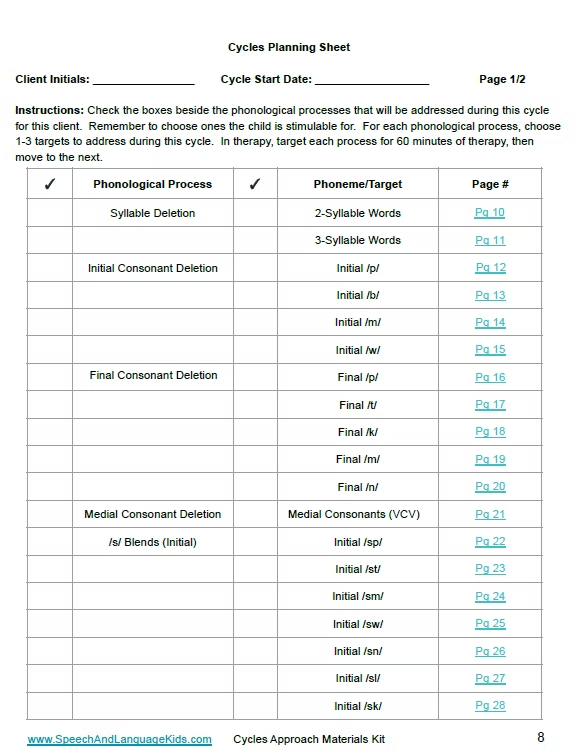
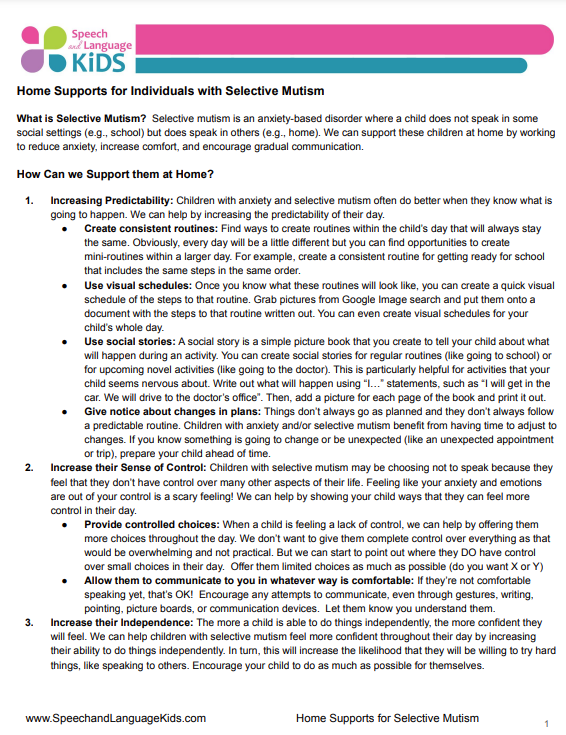
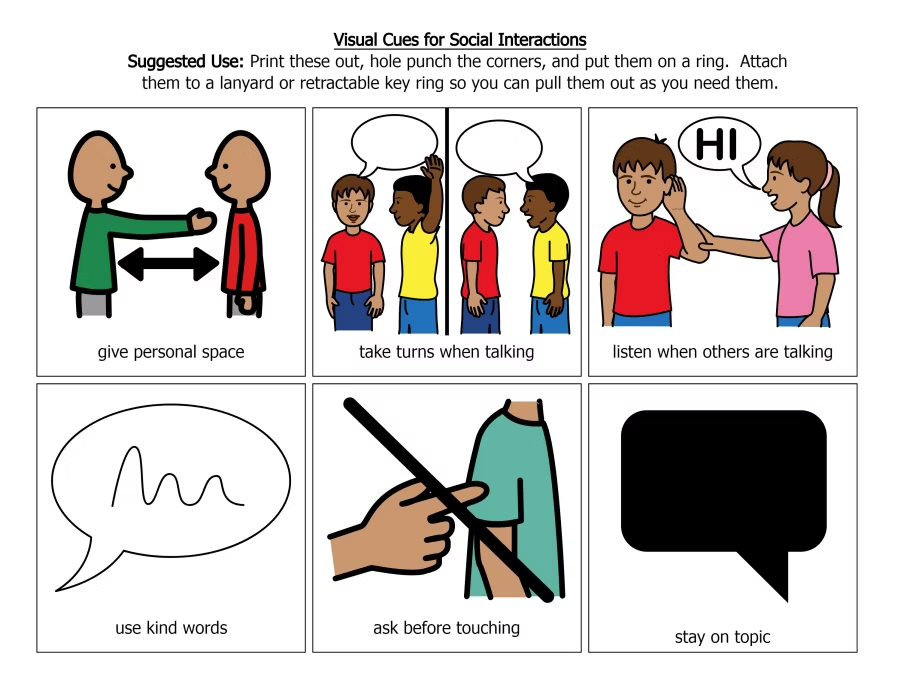
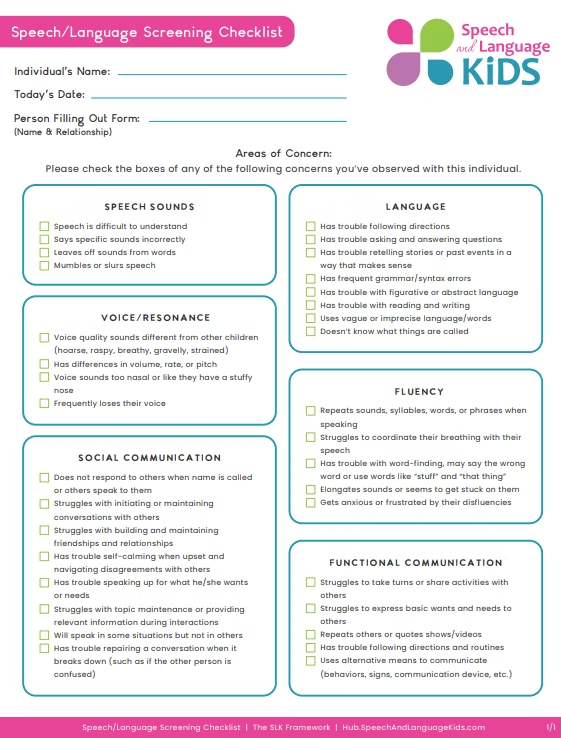
Let's Work on Social Communication
Take a look through the options below and pick the area that feels like the best starting point for this individual. There's no perfect answer—just choose the one that seems most useful right now. If it's not quite the right fit, you can always come back and try a different path. Don't worry if every line doesn't match exactly—go with the one that fits best overall.
Social Awareness and Interaction
Abstract Language
Selective Mutism
Emotional Regulation and Self-Advocacy
Conversational Skills